Achieving ecommerce success: 16 keys to building your business


Table of contents
Talk to a fulfillment consultant today
The formula for ecommerce success largely depends on customer satisfaction by optimizing the customer experience. It begins with establishing a solid stack of technologies and services that allow you to monitor and evaluate every aspect of your business, enabling you to make immediate adjustments and course-correct for optimal performance. Then, learning how to run a successful ecommerce business involves knowing how to measure success, identifying the key factors that impact it, and ways to gain a competitive advantage ahead of other businesses. In order to effectively scale and sustain brand growth, there are several key areas to consider, which include everything from transparent tracking to simplified customer returns. The key is to keep the holistic customer journey in mind every step of the way, and remain flexible and adaptable as buying behavior evolves.
How is success in ecommerce measured?
There are a few success factors when it comes to ecommerce. Using data and analytics is essential for the success of any company to quantify efforts and track growth. Applying measurement tools to analyze inventory and customer lifetime value allows ecommerce businesses to forecast and scale effectively without lowering the quality of service and products. Success can be controlled through transparency tracking, customer insights, and network optimization.
1. Transparent delivery tracking
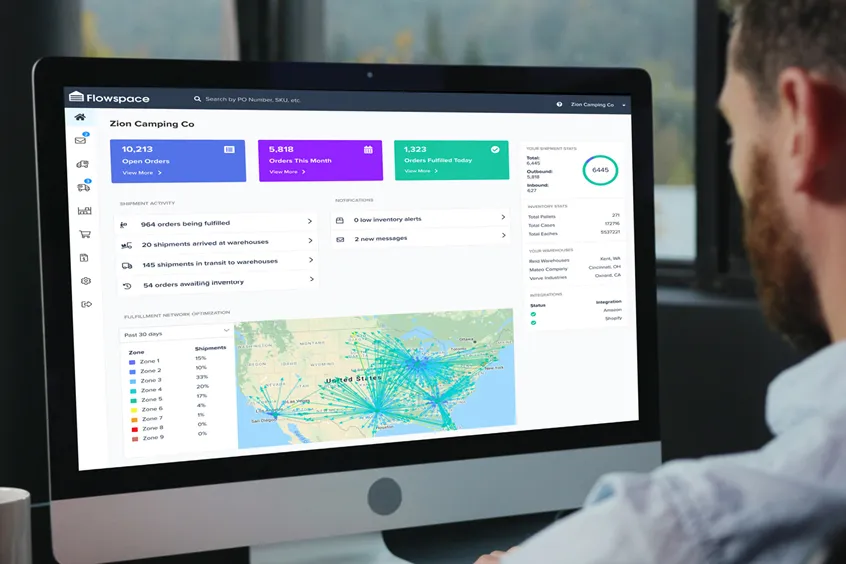
Implementing integrated software provides real-time visibility from the time an order is placed to the time it arrives at a customer’s door, allowing for intervention as needed to avoid disruption and proactive communication if and when there are changes to delivery.
2. Customer insights
Reviewing data points like customer buying behavior, product trends, and customer lifetime value allow retailers to create a personalized customer experience. It also supports optimal inventory planning and order management across the entire supply chain. Using customer insights helps with fine-tuning selling strategies to increase customer acquisition and support consistent sales growth with your online store.
3. Distributed fulfillment network
Fast, affordable delivery is a top priority of consumers and is made possible through the power of a connected ecommerce fulfillment network that has the ability to scale with a business. Ensuring delivery satisfaction for each customer is made possible through network optimization and platform-level transparency. Flowspace uses a network optimization algorithm to find the optimal fulfillment centers for your brand and determine how to best allocate inventory. As a result, it lowers freight costs, reduces carbon emissions, and ensures on-time, speedy delivery for customers.
What are key success factors that impact ecommerce growth?
Evaluate what matters most to customers, as that will be what impacts the overall success of your company. Then, determine where to focus efforts to achieve a holistic customer experience that will continue to meet and exceed expectations. Key factors include availability, sustainability, simplicity, and accuracy.
4. Availability
When items are out-of-stock, potential customers will immediately look elsewhere to other retailers that can fulfill the request. Flowspace connects all storefronts, marketplaces, and shopping carts within a single platform. Using technology to integrate all selling channels allows ecommerce businesses to manage inventory replenishment with confidence. It supports inventory planning and improves forecasting for future purchases.
5. Sustainability
Consumers' values are changing, and today’s consumers are using their purchasing power to choose companies whose values align with their own. Sustainability is one of the key determining factors when purchasing new products and deciding brand loyalty. Through Flowspace’s network optimization, fulfillment centers are chosen based on closest proximity to customers, which helps to reduce shipping distance and carbon gas emissions.
6. Simplicity
Customers want immediacy and convenience when making purchases. The easier the path to checkout is, the more inclined they’ll be to click to purchase. Therefore, simplifying the checkout process is essential. This entails meeting consumers where they are through an omnichannel approach that allows them to purchase on whatever platform they’re on, whether it’s through a retailer’s website, third-party selling platform, or social media site.
7. Accuracy
More than ever, brands need software that takes into account current trends and setbacks that allow them to accurately forecast demand. Real-time visibility from every channel in one central location protects optimal stock levels to fulfill customer demand without wasting resources on excess inventory.
What can ecommerce brands do to establish a competitive advantage?
Measuring and identifying key factors that impact growth is only the starting point of how to create a successful ecommerce business. Since ecommerce is quickly shifting to becoming the go-to solution for shopping today, it means retailers must strategize ways to set themselves apart. The first steps of setting a strong foundation are essential in order to effectively build business opportunities, but here are ways to improve the customer experience and establish a competitive advantage to elevate them to the next level.
8. Create a user-friendly website
As technology trends in ecommerce evolve, implementing an ecommerce website that easily guides the path to checkout for online shoppers is an absolute necessity. Responsive design, hi-res images, creative copy, and clear calls-to-action are the main elements necessary to make it user-friendly. Additionally, applying Google Analytics tracking to your ecommerce site shows the exact path-to-purchase of the potential customer and provides crucial data points, such as site traffic, cart abandonment percentages, and goal completions to identify where there are holes (and opportunities) in sales and marketing strategy.
9. Focus on personalization
Personalization is a strategic way to establish brand loyalty and increase sales. Apply the component of software technology and integrate all ecommerce sales channels to give customers the option of where and when to buy with a simple click. Often, the point where a customer begins the purchasing path is not where they will end up. Apply data insights to create offers and display products based on user behavior and use them to guide all levels of the supply chain to optimize the customer experience.
10. Offer valuable products
A large part of how to successfully run an ecommerce business is delivering the products consumers seek most. Utilizing customer data and industry insights can better meet the demand of today’s buying behaviors. Rather than relying on of-the-moment product trends, sticking with tried-and-true products that provide everyday value is the way to grow and scale a business effectively.
11. Cross-channel marketing
Cross-channel marketing has evolved from an innovative strategy to an established norm when it comes to ecommerce success. Reaching consumers in different marketplaces meets them where they are at the moment they want to buy. The customer journey often crosses multiple selling channels before hitting the online checkout line. Lead customers to the final destination by giving them options of how to get there.
12. Streamlined fulfillment
Leveraging technology and network optimization supports a streamlined ecommerce order fulfillment process. Instead of relying on in-store fulfillment, choosing optimal fulfillment centers closest to your customer base ensures quick, affordable delivery and reduces the environmental impact of distribution. A connected network also enables flexibility to adapt to fluctuating sales cycles and different levels of company growth, making it ideal for scalability.
13. Excellent customer service
A central network also provides insights to support customer service communication during the post-purchase experience. Real-time tracking visibility and automatic alerts keep customers informed of their delivery status and allow the customer services team to quickly remedy any problems and questions that may arise.
How do fulfillment and operations impact success in ecommerce?
Ecommerce companies succeed when they focus on the holistic customer journey. By optimizing the entire post-purchase experience, it meets customer demands and improves customer satisfaction. This is achieved through:
14. Reduced time to fast fulfillment
Logistics are a key part of how to successfully run an ecommerce business. When there’s a disruption or delay at any point, the rest of the process is negatively affected. With Flowspace, companies can rely on fast, affordable ecommerce fulfillment with picking, packing, and shipping to a company’s exact specifications.
15. Ongoing customer communication
With visibility across the entire network, customer communication is made easier with updates available throughout the entire process, from the time an order is placed to the time it’s delivered. Anticipating customer needs and responding with confidence and real-time updates provide a positive experience and keep customers informed of when their delivery is expected to arrive.
16. Simplified customer returns and support
The customer experience doesn’t end after delivery has been made. Making the return process easy and convenient with support readily available mitigates small problems from turning into monumental ones, which can quickly change a customer’s impression and loyalty to a brand.
Why is fulfillment key to ecommerce success?
Customers have spoken, and fast delivery is at the top of what they desire most from an ecommerce experience. When the fulfillment process fails to meet the demand, it automatically weakens the rest of the supply chain and causes consumers to look elsewhere for their needs. However, fast delivery is not the only factor contributing to the overall success of an ecommerce company. Businesses must look to both their online and offline channels and ensure they sync up seamlessly to create a streamlined experience. They must be able to meet customer demand, personalization preferences, and simplify the shopping experience. This is best achieved by implementing specifically designed fulfillment technology that can be controlled by a centralized location anyone with access can review and use, and outsourcing fulfillment services to those experienced in the field. At Flowspace, we handle the entire logistics process to free up time for businesses to focus on other growth priorities. As the source for useful, reliable information on fulfillment, on-demand warehousing, and third-party logistics, we are the fulfillment company dedicated to providing a solution that will streamline your supply chain operations so that you can meet the demands of your customers with ease.Find out how Flowspace can help you build your ecommerce business today.
Last Updated
category
Related articles



























Start simplifying fulfillment with Flowspace today
Discover how Flowspace can simplify fulfillment and help your brand scale faster, with no long-term contracts or hidden commitments.
