Why Flowspace is the best 3PL for ecommerce: Rated +94 NPS (Verified by EY Parthenon)


Table of contents
Talk to a fulfillment consultant today
Your 3PL touches everything: delivery speed, inventory accuracy, customer experience, operating costs, and your ability to scale. Pick the wrong one, and you'll feel it across the business.
Earlier this year, Flowspace commissioned an independent market study conducted by EY Parthenon to measure how its customers rate their fulfillment experience compared to the broader 3PL market. The study used Net Promoter Score (NPS), one of the most widely used benchmarks for customer satisfaction.
The results:
Flowspace NPS: +94 versus 3PL industry average NPS: -13
That's a 107-point gap, independently verified by EY. For an industry where poor visibility, rigid workflows, slow support, and surprise fees are common complaints, the difference is hard to ignore.
What is NPS?
NPS measures how likely customers are to recommend a company to a friend or colleague. Respondents answer on a 0–10 scale and fall into three buckets:
- Promoters (9–10): loyal customers who actively recommend the business
- Passives (7–8): satisfied but not enthusiastic
- Detractors (0–6): unhappy customers who may warn others away
The final score runs from -100 to +100. Anything above +70 is considered world-class. Flowspace's +94 clears that bar by a wide margin.
What to look for when choosing a 3PL
Your 3PL isn't just a vendor, but an integral, operational partner. Your fulfillment provider handles inventory storage, order packing and shipping, returns, retail compliance, and marketplace requirements. When it works well, customers get the right product on time and have a wonderful post-purchase experience.
When it doesn't, the problems compound fast.
Poor 3PL performance tends to show up as:
- Delayed shipments
- Inventory inaccuracies
- Costly stockouts or overstocks
- Lack of cost transparency
- Marketplace penalties
- Limited visibility across channels
- Time-consuming support escalations
A high NPS is a signal that a provider is consistently executing across all of these areas—not just on a good day, but reliably enough that customers are willing to put their name behind it.
Why the 3PL industry average is so low
A -13 industry average NPS isn't just a bad number. It means more customers are actively warning others away from their 3PL than recommending it. That's a structural problem.
Most traditional 3PLs were built for a simpler era. Today's ecommerce brands sell across Shopify, Amazon, Walmart, TikTok Shop, retail, and wholesale simultaneously. They need real-time inventory visibility, flexible workflows, reliable integrations, and support teams that actually pick up the phone (or better yet, are heads of problems so they rarely have to reach out).
Most 3PLs weren't designed for any of that.
The same five complaints come up again and again:
- Limited visibility: No centralized view of inventory, order status, or fulfillment exceptions. Brands are flying blind.
- Rigid operations: Can't support custom packaging, kitting, retail routing, or anything outside the standard workflow without a fight.
- Fragmented support : As 3PLs grow, dedicated account management gets replaced by ticket queues. Issues take days instead of hours.
- Hidden costs: The rate card looks fine until the invoices start arriving. Storage fees, project fees, integration fees, and exception charges add up quickly.
- Weak omnichannel capabilities: Infrastructure built solely for DTC struggles when brands need to simultaneously fulfill ecommerce orders, marketplace orders, and retail replenishment.
Why Flowspace stands apart
Flowspace’s +94 NPS comes from an independent EY Parthenon study, not our own internal reporting. The reasons behind the score are just as important as the number itself.
1. Better visibility across orders and inventory
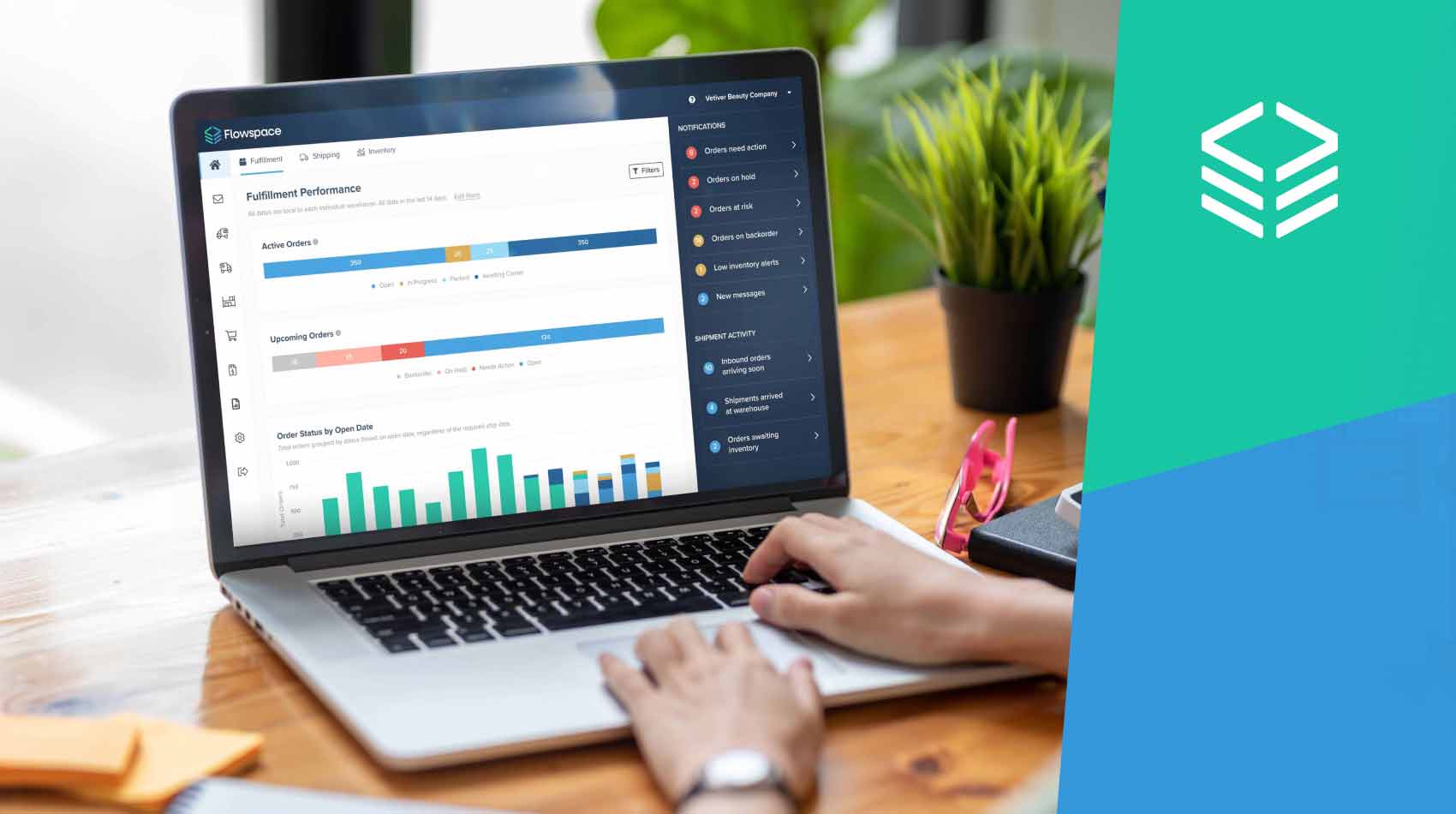
Flowspace gives brands a single view across their entire fulfillment operation—inventory levels, order status, and performance metrics across every channel, in one platform. For growing brands juggling multiple storefronts and warehouses, that kind of visibility cuts down on manual work, speeds up decisions, and eliminates the constant back-and-forth with your 3PL just to find out where an order is.
2. Built for multi-storefront complexity
Most fast-growing brands are omnichannel, meaning they’re managing Shopify, Amazon, Walmart, TikTok Shop, and retail or wholesale accounts at the same time. That's a lot of moving parts, and most 3PLs weren't built to handle all of it cleanly.
Flowspace's omnichannel fulfillment platform is designed for exactly this. It connects ecommerce storefronts, marketplaces, and retail channels in one place, so brands can scale across channels without the operational complexity multiplying alongside them.
3. More flexible fulfillment workflows
Not every order ships in a standard box. Brands need custom packaging, on-demand kitting, bundling, inserts, retail prep, and special projects. Consequently, they need a 3PL that can handle those requests without treating them like exceptions.
Customers in the EY study specifically called out Flowspace's flexibility as a differentiator. Whether it's a one-time project or an ongoing custom workflow, Flowspace can support it without the friction that slows things down at other providers.
4. A higher-touch partnership
Technology matters, but at the end of the day, fulfillment is a service business. When something goes wrong, teams need to reach a person who knows their account, not submit a ticket and wait.
Flowspace's partnership model is built around dedicated support. Customers get hands-on account management rather than being funneled through a generic queue. That responsiveness shows up in faster issue resolution, fewer escalations, and a working relationship that actually improves over time.
5. Lower total cost of ownership
Pick, pack, and ship rates are just the starting point. The real cost of a 3PL relationship includes storage, packaging materials, labor, special projects, integration fees, the cost of errors, and the internal time your team spends managing the relationship and chasing down issues.
When the EY study looked at total cost of ownership (not just line-item rates), Flowspace came out as the more cost-effective option. For brands trying to protect margins while growing, that's the number that actually matters.
What a +94 NPS means for your brand
A +94 NPS says a lot about how Flowspace customers feel about the partnership. They’re not just happy with the service, but they’re also willing to recommend Flowspace to other brands.
That matters in fulfillment, where your 3PL is responsible for inventory, orders, delivery performance, and the customer experience that follows. For ecommerce brands, the right partner can mean stronger inventory control, fewer surprises, more flexibility across sales channels, and more confidence as the business scales.
With the broader 3PL industry averaging -13, the difference is hard to ignore. Flowspace’s score points to a fulfillment experience built around the way modern brands actually operate.
Flowspace fulfillment is your 3PL for ecommerce
Ecommerce has gotten more complex with more channels, more SKUs, and higher customer expectations.
You need connected technology, flexible operations, omnichannel fulfillment capabilities, and a service team that treats you like a partner. That's what Flowspace delivers, and according to an independent EY Parthenon study, our customers agree.
Ready to see what a higher-performing fulfillment partner looks like? Connect with Flowspace to learn how we can help you scale smarter.
3PL NPS FAQ
What is a good NPS score for a 3PL?
Anything above +70 is considered world-class across industries. In the 3PL sector specifically, the bar is much lower. The industry average sits at -13, meaning most providers have more detractors than promoters. A score above +50 would be strong for a fulfillment provider; +94 is exceptional.
How do I evaluate a 3PL before signing a contract?
Look beyond the rate card. The real cost of a 3PL relationship includes storage, labor, integrations, error rates, and the internal time your team spends managing the relationship. Ask for customer references, request a demo of their technology platform, and find out how support is handled when something goes wrong — ticket queue or dedicated account manager.
What does NPS measure and why does it matter for fulfillment?
NPS measures how likely customers are to recommend a company to others. In fulfillment, it's a useful proxy for operational reliability — providers with high NPS scores tend to execute consistently across order accuracy, inventory visibility, and issue resolution. A low NPS often signals systemic problems that won't show up in a sales pitch.
What is omnichannel fulfillment?
Omnichannel fulfillment means managing orders across multiple sales channels from a single platform. Most traditional 3PLs were built for one channel and struggle when brands scale across several simultaneously.
Why do so many brands switch 3PLs?
The most common reasons are poor visibility into inventory and order status, rigid operations that can't support custom workflows, slow or impersonal support, and costs that are higher than expected once all fees are factored in. Brands typically switch when these issues start affecting their customer experience or margins.
What makes Flowspace different from other 3PL providers?
Flowspace earned a +94 NPS in an independent EY Parthenon study, 107 points above the industry average of -13. Customers specifically cited real-time visibility, omnichannel fulfillment capabilities, flexible workflows, and dedicated account management as differentiators. On total cost of ownership, Flowspace also came out as more cost-effective than traditional 3PLs when all fees are considered.
Last Updated
category
Related articles











Start simplifying fulfillment with Flowspace today
Discover how Flowspace can simplify fulfillment and help your brand scale faster, with no long-term contracts or hidden commitments.
