How brands use omnichannel fulfillment to manage B2B retail across multiple channels
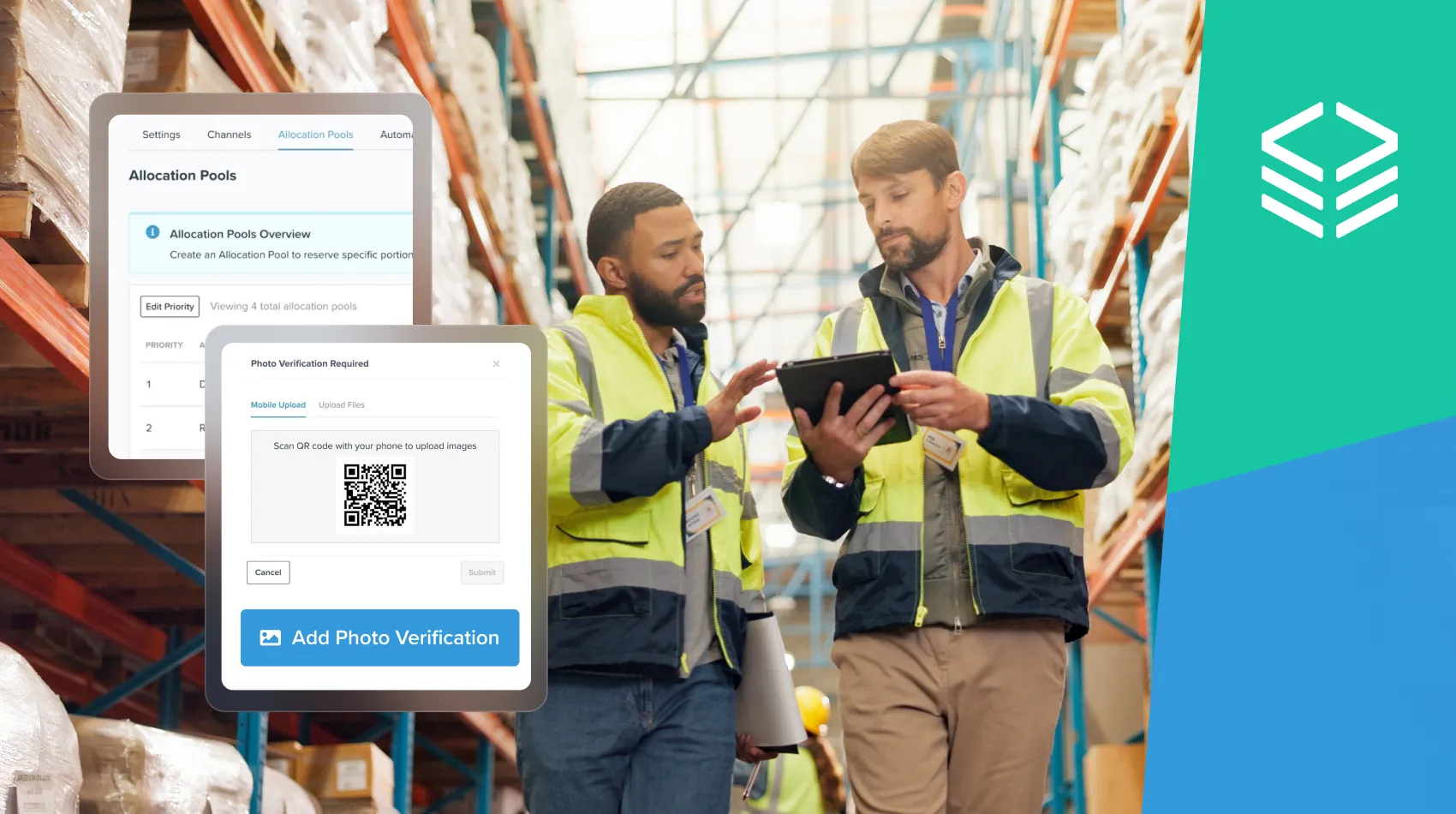

Table of contents
Talk to a fulfillment consultant today
Managing B2B retail across multiple channels requires clear inventory rules per channel, compliance controls built into the warehouse workflow, and an omnichannel fulfillment platform that enforces both automatically.
Brands that scale retail, wholesale, and DTC successfully don't rely on manual processes. They embed operational controls into their fulfillment infrastructure early on.
Flowspace's Inventory Allocation Pools and Order Compliance Automation are built around exactly that model.
Omnichannel growth has an operational ceiling—and most brands hit it sooner than they expect
The conventional wisdom in omnichannel fulfillment is that complexity is a scaling problem. Get big enough, invest in the right systems, and the operational chaos sorts itself out. In practice, it’s not that straightforward.
Every channel added to the mix introduces new inventory demands, new compliance requirements, and new ways for stock to end up in the wrong place. A DTC flash sale quietly drains inventory earmarked for a Target PO. A wholesale order ships with the wrong label because packing instructions exist in a binder that nobody reads consistently. A chargeback dispute lands with no documentation to fight it.
These aren't failures of execution, but that of failures of infrastructure— and they happen to brands at every stage of growth, not just the ones that scaled too fast.
The brands that consistently win in B2B retail fulfillment have figured out something the others haven't: operational control isn't something you retrofit once you're big enough. It's something you build into the fulfillment workflow as soon as possible, so it scales with the business instead of breaking under it.
How do brands manage B2B retail fulfillment across multiple channels?
After working with hundreds of omnichannel brands scaling retail, wholesale, and DTC simultaneously, two failure points show up more than any others: inventory leakage and compliance errors at pack time.
Inventory leakage
When inventory lives in a single undifferentiated pool, every channel competes for the same stock. DTC demand spikes—from successful marketing campaigns or suddenly going viral—drain retail-committed inventory. Wholesale SLAs get missed because stock that was supposed to cover them got consumed by lower-priority orders. Manual holds and duplicate SKUs are the usual fix until volume makes them impossible to maintain.
Reel Paper's Supply Chain Director Hector Omoigui described it plainly:
"We were spending hours every week engineering workarounds—hold orders, dummy SKUs, manually coordinating with the warehouse just to make sure Target inventory didn't get pulled by another retailer."
Compliance errors at pack time
Big-box retailers don't grade on a curve. Missed labeling requirements, wrong inserts, non-compliant packing—each one is a chargeback or a vendor scorecard strike that damages the retail relationship.
The operational challenge here has less to do with knowing the requirements—and more with ensuring every warehouse worker, across every shift, follows them consistently. And, more importantly, that there's a record proving they did when a dispute comes up.
These two failure points share a common cause: omnichannel fulfillment infrastructure that wasn't designed for the operational demands of multichannel retail.
Building the operational model that actually scales
Fixing omnichannel fulfillment doesn’t mean working harder or adding more manual oversight.
It's about changing where the rules live. Moving them out of spreadsheets, Slack threads, and SOPs and into the fulfillment workflow itself, where they can be enforced automatically at scale.
That's the design principle behind two new capabilities Flowspace just released for its omnichannel fulfillment platform: Inventory Allocation Pools and Order Compliance Automation.
Inventory Allocation Pools
“Now that we’ve turned [Inventory Allocation Pools] on, I no longer stress about which retailer orders will be allocated first, and we’re able to receive and prepare high-priority orders faster than before." - Hector Omoigu, Supply Chain Director, Reel Paper
Inventory Allocation Pools gives operations teams a rules-based system to reserve inventory by channel, enforced automatically by Flowspace's Order Management System.
Brands can create named pools per channel, set the matching conditions once, and the platform routes orders accordingly. If a pool's inventory is exhausted, matched orders go to backorder—they never draw from another channel's protected stock. DTC orders can't drain the inventory committed to a Costco order, for instance. Wholesale SLAs stay intact regardless of what's happening across other channels. Subscription customers also get inventory separated from the general DTC pool.
The operational shift here is significant: instead of ops teams manually managing inventory allocation across channels, the rules are built into the system and enforced on every order, at any volume.
Order Compliance Automation
Order Compliance Automation with Photo Verification follows a similar principle and applies it to compliance.
Instead of relying on warehouse staff to reference external SOPs, retailer-specific packing instructions are embedded directly into the omnichannel fulfillment workflow—surfacing at pack time for every matching order, with text, images, and links so there's no ambiguity about what a compliant pack looks like.
Photo verification requires staff to upload a photo of the completed pack before an order can close, creating an auditable compliance record for every shipment.
For brands shipping to Target, Walmart, or any big-box retailer with strict compliance requirements, the shift is from hoping instructions get followed to proving they were, backed by documentation that holds up in a chargeback dispute.
Operational control is a competitive advantage, not a cost center
There's a version of B2B retail fulfillment where operational control is treated as overhead—something to minimize, automate away, or deal with later. The brands scaling retail successfully treat it the opposite way: as the infrastructure that makes growth sustainable.
Retail partners notice. On-time, in-full shipments, clean compliance records, and zero chargeback disputes aren't just operational metrics, but the foundation of retail relationships that actually scale. The brands that protect those relationships through operational rigor are the ones that get more shelf space, better terms, and longer partnerships.
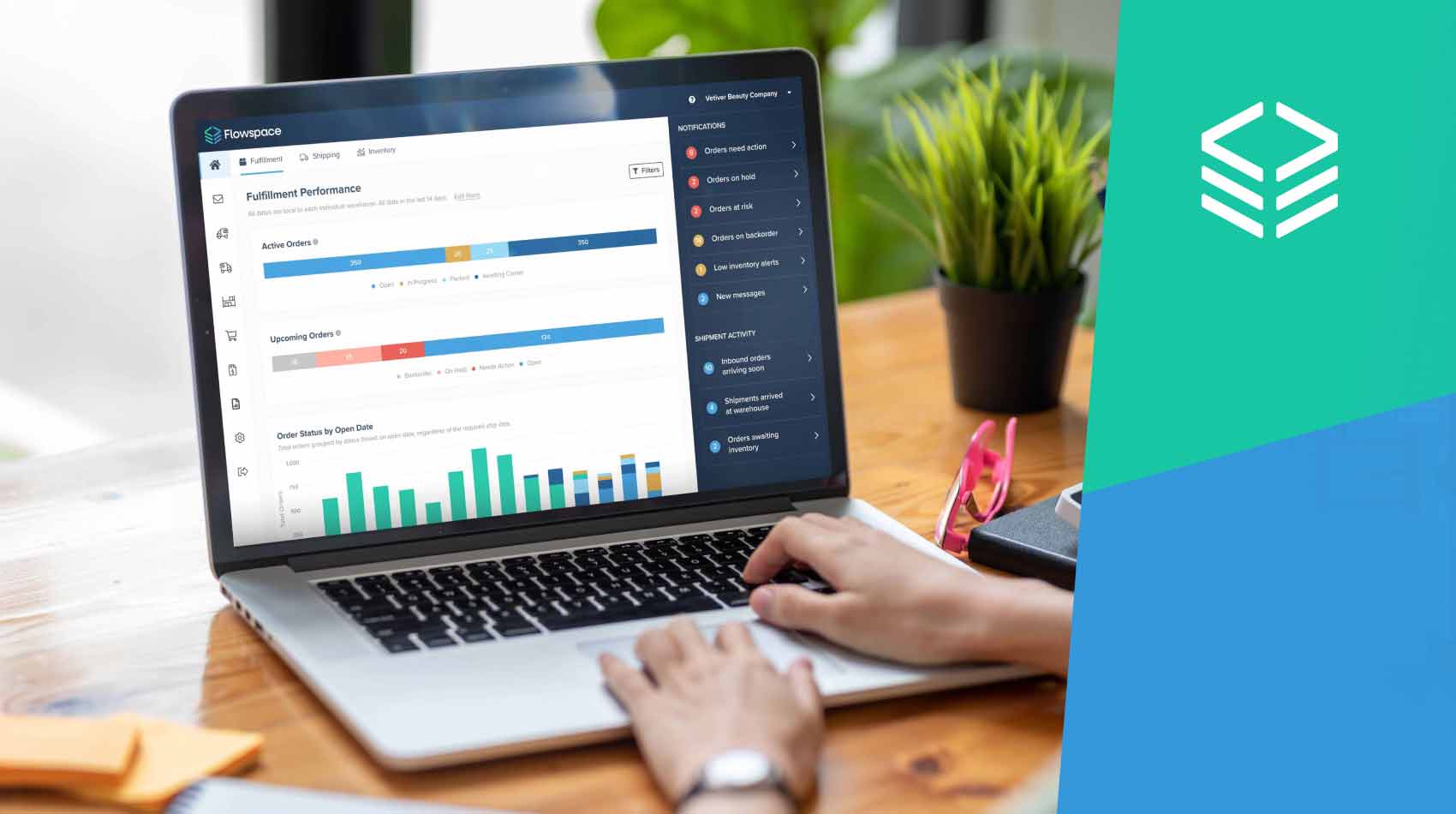
Inventory Allocation Pools and Order Compliance Automation are part of Flowspace's broader B2B Retail Fulfillment Solution—a unified omnichannel fulfillment platform giving brands a single operational view across retail, wholesale, and DTC.
For Reel Paper, that centralization changed how the whole operation runs.
"We fulfill orders through multiple channels, and the Flowspace platform centralizes all fulfillment operations in one place," said Hector Omoigui from Reel Paper. "It's easy and efficient to manage orders and inventory for all channels, all in one system, where everyone has visibility and knows what's going on."
Scale retail without the operational risk
The brands that treat operational control as infrastructure rather than overhead don't wait until they're big enough to justify the investment. They build it in early. A missed compliance requirement, a chargeback dispute with no documentation, and an inventory mix-up that delays a retail PO are all recoverable errors. But at scale, across multiple channels, they add up to damaged retail relationships that are hard to rebuild.
That said, setting up the right fulfillment infrastructure mid-growth is expensive and disruptive—and for most brands scaling into B2B retail, that's what delays getting the right systems in place.
Flowspace's free retail setup is designed to remove that barrier entirely. Available until June 30th 2026, free EDI integrations, first freight shipment free, first-month inbound fees waived, and white-glove freight concierge take the pressure off, backed by dedicated compliance and workflow controls to make B2B retail growth simple.
Claim your free retail setup here.
Inventory Allocation Pools and Order Compliance Automation are available now for all Flowspace customers.
Last Updated
category
Related articles





















Start simplifying fulfillment with Flowspace today
Discover how Flowspace can simplify fulfillment and help your brand scale faster, with no long-term contracts or hidden commitments.
