9 mistakes ecommerce businesses make before the holidays and how to avoid them


Table of contents
Talk to a fulfillment consultant today
If you’re an eCommerce business then you know that the last two months of the year can make or break your business. That’s no exaggeration. Last year, 2018, Cyber Monday was the largest online shopping day in American history. In this article we’ll explain the 9 biggest mistakes eCommerce businesses make before the holidays and what you can do to avoid them.
Experts project the 2019 holiday season to be even busier. In fact, a Bizrate Insights 2018 survey reports that 60% of consumers plan to spend more than 50% of their holiday budget shopping online in 2019.
So, what are you going to do to be ready for the holidays?
1. Not Communicating Carrier Cutoffs
As an eCommerce business, a shipping failure is the last thing you need during the busy holiday season. When packages are lost, you have to replace them and pay extra for expedited shipping. Not to mention the possibility of losing a customer.
One way to insulate your supply chain from the dreaded shipping failure is to enforce a shipping deadline, where in orders need to be submitted by a specific date to arrive on or before December 24th.
Be very clear about the shipping deadline with customers so they can know when to expect their orders. December 14 tends to be the shipping deadline for most freight carriers for shipments to arrive by Christmas Eve.
2. Assuming Your Website Servers Can Handle The Extra Traffic
Picture your website server as a highway - the more traffic driving on the highway, the more congested the road, the slower the speed and the higher the risk of an accident that can cause a lane closer.
Nearly 50% of all online shoppers expect a webpage to load in two seconds or less. Slow web pages increase the chance of website abandonment, so it’s very important that eCommerce businesses take the steps to ensure their servers can handle the extra traffic flowing to your website thanks to the holidays.
3. Not Ordering Enough Inventory
If you're sure your eCommerce website can handle the strain of extra holiday web-traffic then the next thing you need to do is ensure you order enough inventory to fill all of those extra orders. It’s a complicated and time-consuming process to get a customer to actually click “buy” online. It would be a shame to guide a customer down the conversion funnel only to run out of inventory and lose the sale at the last step.
4. Running Out of Packing Materials
Your website is secure and you’ve ordered enough inventory. Now you need to make sure you order enough packing materials to pack and ship out all of those extra packages. You don’t want to wade hip deep into the holiday shipping blitz only to hear one of your inventory pickers say “we’re out of boxes.”
If you estimate that you’re going to ship 10,000 orders during the holiday rush, you are going to need a minimum of 10,000 boxes or bags, 10,000 labels, and the appropriate amount of tape, bubble wrap, and packing materials.
5. Not Hiring Enough Help
If it takes 4 warehouse employees 10 minutes to pick, pack, label, and ship an order - you can ship approximately 195 orders per day, assuming a standard eight-hour work day. So, what happens when you have 450 holiday orders to pick, pack, and ship? That’s why it’s incredibly important that you assign enough staff to handle the influx of orders coming in for the holidays.
6. Not Offering Rush Shipping
Online holiday shoppers expect the ability to rush ship items and are more than willing to pay extra for it. Just be mindful to post shipping times so that customers know what to expect and what they are paying for.
Be prepared for order changes, as consumers will inevitably change addresses, or choose different shipping options following a purchase. Make sure your fulfillment team is prepared to make changes on the fly.
7. Forgetting to Validate Delivery Addresses
One of the biggest mistakes an eCommerce businesses or merchant can make during the holidays is neglecting to validate delivery addresses. Ground-package carriers (UPS, USPS, FedEx, etc) and freight carriers are not responsible for incorrect missed shipments when the delivery address is incorrect. Return shipments are not only expensive, they slow down your supply chain during the time of the year when you need it to work most efficiently. In the long run, the extra time it takes to validate a delivery address is well worth the pain it saves.
8. Relying on Incorrect Shipping Estimates
Just like you need to validate delivery addresses, you also need to confirm transit times with your freight carriers. It doesn't matter if every step of the fulfillment process worked exactly as planned if your customer in New York expects their package in 2 days but it takes 3 days for a truck to make the trip from California.
9. Waiting too Long to Outsource Holiday Warehousing and Fulfillment
Arguably, the biggest mistake an eCommerce business can make during the hectic holiday season is waiting too long to outsource warehousing and fulfillment to a 3PL. Choosing a third-party logistics provider to process your holiday overflow is one of the best decisions a supply chain can make.
In fact, supply chains that utilize third-party logistics providers during the holidays report increased efficiency, greater capacity, and a lower cost of doing business. If you are looking to thrive during the holidays, then hiring a third-party logistics provider is how to do it.
How To Avoid Making Holiday eCommerce Mistakes: Hire Flowspace
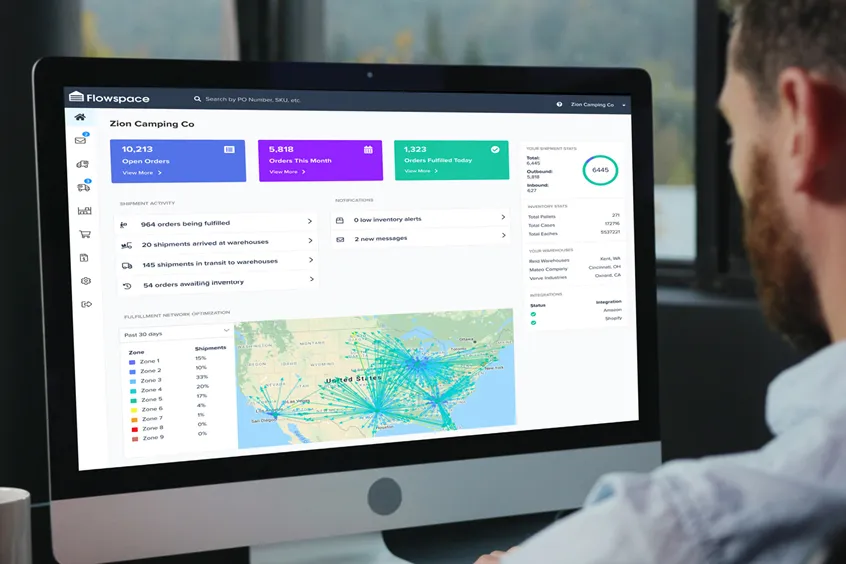
You can avoid all of these holiday eCommerce shipping mistakes by outsourcing warehousing and fulfillment to Flowspace. With over 1000 warehouses and fulfillment centers nationwide, Flowspace is the solution for eCommerce businesses and merchants looking to gain a strategic advantage this holiday season. Get started today!
Last Updated
category
Related articles









































Start simplifying fulfillment with Flowspace today
Discover how Flowspace can simplify fulfillment and help your brand scale faster, with no long-term contracts or hidden commitments.
