Achieving competitive advantage through supply chain optimization
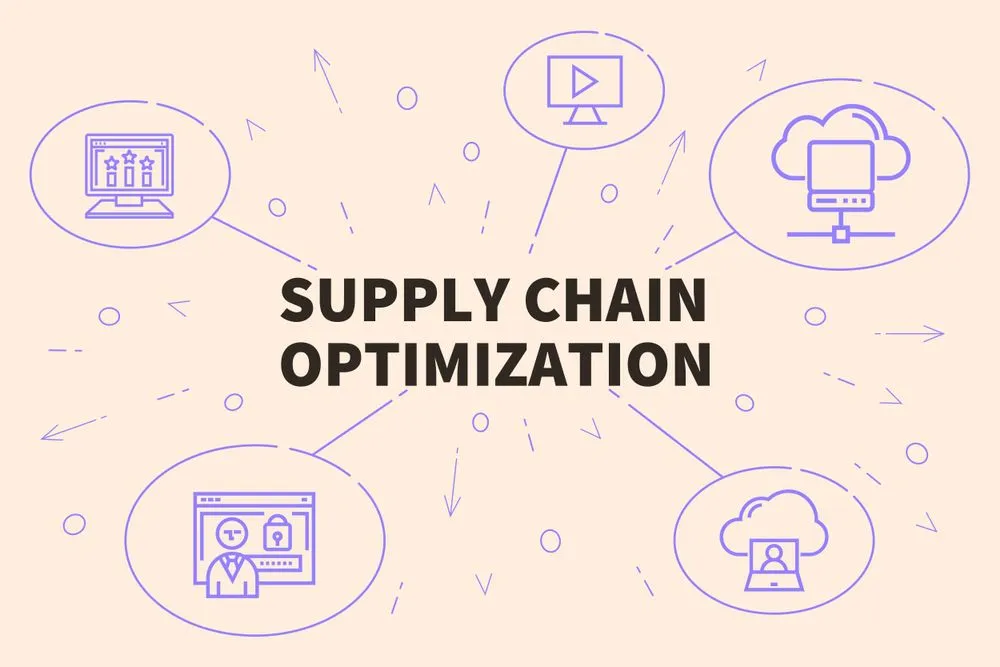

Table of contents
Talk to a fulfillment consultant today
Supply Chain Optimization (SCM) is an operations strategy that enables an organization to maximize the profitability of their supply chain and improve customer satisfaction. This guide has everything you need to optimize your supply chain and improve your business processes and profitability.
What is Supply Chain Optimization
The term “Supply Chain Optimization” refers to the administration of specific supply chain processes to maximize customer value and achieve a competitive advantage. In other words, supply chain management represents the conscious efforts of an organization to develop and run their supply chain in the most effective and efficient way possible.
This includes the optimal placement of inventory within the supply chain network, minimizing operating costs, and maximizing the gross profit of products distributed through the supply chain.
Why Supply Chain Optimization is Important
Supply chain management is important because it's proven to work, and you need it to compete in a global market. Industry insights reveal that businesses with optimal supply chains have fifteen percent lower supply chain costs, substantially smaller inventory holdings, and faster cash-to-cash cycles than firms with no supply chain management strategy.
What You Need to Know about Supply Chain Optimization
Though application is likely to differ between firms, all supply chain optimization strategies are based on two core ideas. The first is that any inventory delivered to a customer represents the cumulative effort of multiple organizations, referred to collectively as the supply chain.
The second is that all the partners that make up the supply chain are linked together through physical and informational flows:
● Physical flows involve the production, movement, and storage of inventory and materials, and are the most visible piece of the supply chain.
● Informational flows enable supply chain partners to disseminate their plans, and control the day-to-day movement of goods and materials through the supply chain.
Though supply chain management relies on the optimization for physical and informational flows, it’s as much a philosophical approach as it is a host of tools and techniques. Like all great philosophies, it requires a great deal of interaction and trust between partners if it is to work.
Best Practices for Supply Chain Optimization: How To Optimize Your Supply Chain and Inventory Management Processes
As stated, any attempt to strengthen your supply chain will likely be inconsequential without the cooperation of your supply chain partners. That being said, establishing the systems needed to communicate with supply chain partners and make intelligent decisions is easier said than done.
These best practices for supply chain management will create efficiencies, maximize profit, and help you manage the critical relationships that link your supply chain.
Prioritize Relationship Management
Of all the activities supply chain managers perform, relationship management is the most susceptible to break down, and the most likely to lead to inflated lead times and problems throughout the entire supply chain.
That’s why most supply chain management strategies place so much emphasis on relationship management. One way to better manage relationships with supply chain partners is to invest in infrastructure to ensure timely, transparent communication between the manufacturer, transportation providers, retailer, and the customer.
Invest in Infrastructure, Assets, and Technology
Supply chain management calls for every facet of an organization to work cohesively as a single unit. Fortunately, there are numerous management softwares available that integrate different business functions enabling different departments to work together more effectively.
Centralized Management Software also provides an opportunity to collaborate with partners, improve fulfillment rates, increase product availability, and ensure the leanest supply chain possible.
Implement a Multichannel Approach for Supply and Demand Balancing
A multichannel approach to supply and demand balancing is the best way for an organization to build a responsive supply chain, and satisfy the need to sell as much as possible without incurring the costs of excess stock.
A multichannel approach can also help supply chain managers to plan ahead, assist with forecasting trends to better align with customer demands, reduce lead times, improve service levels, and reposition inventory to maximize profitability.
Focus on Core Strengths
The best way to achieve a competitive advantage through supply chain management is to focus on core strengths. Unfortunately, far too many organizations overextend themselves with inventory management and order fulfillment tasks that lay beyond their expertise.
Though companies invest millions of dollars into their supply chain management and inventory strategies, they are unlikely to find the insight, or optimizations needed to maximize supply chain efficiencies without expert help. That’s why so many organizations turn to third-party logistics firms for supply chain optimization and inventory management.
Outsource Supply Chain Optimization to a 3PL
For your business, a supply chain optimization initiative is a special occurrence that doesn't happen often. But that’s not the case for experienced third-party logistics providers, like Flowspace.
With a third-party logistics provider in your corner, you can tap into their greater resources and leverage them in favor of your organization. You could, for example, capitalize from their relationships with transportation carriers to lower your transportation costs and warehouse providers to secure better rates than if you’d approached them on your own.
A 4PL like Flowspace can also help optimize your network and create a more dynamic and responsive supply chain. Flowspace provides you with analytics to focus on your demand planning for the coming months. With a nationwide network of 1,000+ warehouses and fulfillment centers, Flowspace is the best choice you can make for your new eCommerce store.
Different from traditional 3PLs, Flowspace enables businesses with the supply chain management they need to gain a strategic advantage over their competition and ensure their supply chains are as efficient and profitable as possible. If supply chain optimization is what your business needs to optimize your efficiency and logistics, Flowspace is here to help. To understand how Flowspace can help optimize your supply chain management, request for more information below.
Last Updated
category
Related articles


































Start simplifying fulfillment with Flowspace today
Discover how Flowspace can simplify fulfillment and help your brand scale faster, with no long-term contracts or hidden commitments.
