
About this episode
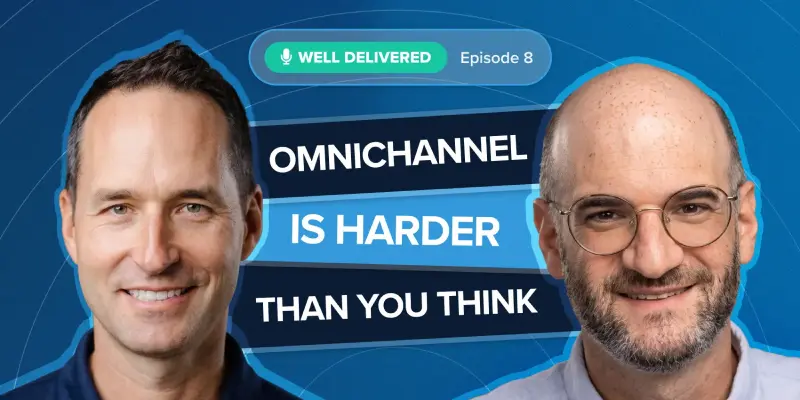
Most brands don't set out to build a complex omnichannel fulfillment operation—it evolves as they grow. A DTC channel gets added. Then wholesale. Then foodservice. Then EDI. And suddenly, the 3PL contract you signed two years ago can't support the omnichannel order volume and complexity your business actually needs.
In this episode, Kara Strasser, VP of Supply Chain at Made In Cookware, walks through how the brand rebuilt its omnichannel fulfillment strategy from the ground up—replacing a rigid, single-channel 3PL with a flexible hybrid model built to scale across every channel.
Key takeaways
- Omnichannel fulfillment requires flexibility—rigid 3PL contracts become a liability as your channels grow
- Single-source fulfillment partners create risk; optionality is essential for omnichannel brands
- Data visibility across channels is the foundation of a resilient fulfillment strategy
- A hybrid owned + 3PL fulfillment model gives brands a real-world testing ground for scaling new channels
- AI automation is the next frontier for omnichannel fulfillment teams managing high operational complexity
About the Guest
Kara Strasser is the VP of Supply Chain at Made In Cookware, a premium kitchenware brand based in Austin, TX. With a background in engineering and management consulting — including supply chain work at Deloitte — Kara brings a systems-minded approach to omnichannel fulfillment operations. At Made In, she oversees a hybrid fulfillment model spanning an owned warehouse in Texas and a national 3PL network, with a current focus on AI-driven automation and omnichannel order management.
Ben Eachus (00:02.586)
Okay. Good afternoon. My name is Ben Eachus and I'm the co-founder and CEO of Flowspace and welcome to another episode of Well Delivered, a podcast where we get to speak directly to brand operators about what it's like to scale. Joining us on our call today is Kara Strasser, who's the VP of supply chain at Maiden, a fast growing kitchenware company based in Austin. So welcome to the show Kara.
Kara Strasser (00:26.562)
Thank you guys, thanks for having me.
Ben Eachus (00:28.592)
Awesome. And Kara, before we get started, I would love to just learn how you got your start in supply chain. I noticed you were a consultant first and then jumped over the brand side. So I'd love to hear more about.
Kara Strasser (00:41.902)
Yeah, it's a good question and something that I always kind of ask myself how I landed exactly at Maiden, a little bit of trial and error, a little bit of following trusted friends or colleagues. I have an engineering and technical background, was one of those kids always watching how it's made or, you know, those fun builder shows when I was younger and my parents pushed me into
engineering. And it was great, but I was missing some of that real world context of things of being in a lab or like super heavy technical product design. And consulting was very big at Georgia Tech and even for engineers a very big career path. And I saw a bunch of really trusted
classmates going into engineering or going into consulting. And I thought, okay, maybe I can give this a try too. If I'm following these people, maybe I'll follow them for a career path. Did that for about five years and kind of slowly got closer and closer to operations supply chain. I started doing a lot of life sciences work and kind of like drug trial work.
cancer research type work within that space. But again, missing something, then got into healthcare supply chain consulting and started to find a little bit of a groove there. Right before I was leaving for Maiden, I was actually doing strategic sourcing and fulfillment network.
optimization for a few hospitals during the COVID time. I was sourcing N95s in PPE for some of the major hospitals during COVID. It was great, but a little bit of a burnout. And that's when my former, one of my former managers at Deloitte was at Maiden and wanted a chance to work with him again and took that jump.
Ben Eachus (02:29.774)
Wow.
Kara Strasser (02:46.44)
And it seems like it's really has fit. I get to bring some more technical experience to the role, get to lead, engineer a little bit more. And it's been fun working at a small business instead of this big, massive behemoth of an organization. So yeah, who knows if it's a long-term, long-term stay in retail CPG supply chain, but it feels like a really good fit right now.
Ben Eachus (03:11.632)
That's awesome. I think that that's actually one of the things that attracted me to supply chain is that the numbers on a spreadsheet actually represents something real, right? There's like a physical product moving and there's a lot of math involved, but it's obviously a lot of people involved too, right? Like people are touching physical products. These things are touching so many hands before they get to someone. And I've always found that, you know, it can be stressful at times, but very interesting and never boring for sure.
Kara Strasser (03:18.87)
Yeah.
Kara Strasser (03:41.806)
Challenges are hard, but the outcome that you're looking for, usually the answer is clear. I think that's where it makes it interesting or satisfying is you always know what you're trying to accomplish. Maybe how you get there is a little fuzzy, but what you want to accomplish is very clear and that makes it not easy per se to do, but.
Ben Eachus (03:41.881)
in
Ben Eachus (03:47.951)
Yes.
Kara Strasser (04:05.755)
it makes the desire easy or the gumption to go fix it easy because you know what the answer is.
Ben Eachus (04:13.7)
That's a great point. And one of the things I wanted to ask you is you're running supply chains for a fast growing brand in arguably like one of the most dynamic time periods in this last five or six years. have COVID, you have the come down from COVID, which impacted different sales, where you're selling your products. Also, you had tariffs earlier this year and the year before. So what is your main focus and any advice you would have to kind of stay nimble to address?
Kara Strasser (04:17.582)
you
Kara Strasser (04:25.518)
Thank
Ben Eachus (04:42.736)
from these things that you can't control.
Kara Strasser (04:44.942)
Yeah, great question. I think having optionality is one.
Of course, there's great opportunity in having single source partners on production, on services. Maybe you'll get great scale pricing, but then you're locked in and that can maybe be challenging once you need to make a change. And I'm sure we'll get into it later on the move to flow space, but that was a very big reason for us to move to flow space. There's a nibbleness and flexibility and optionality that we had.
And then also just having all the information at the ready at any point to be able to understand what's going on. There were a few years back where we didn't have some of our data well integrated and we had no idea how to make decisions or how to pivot because the answers weren't there. And now that we have all the information we need for
transit time to different countries, landed cost by SKU, know, cost of containers with different carriers or different transit methods. We can be quite a bit more nimble with the decision because we understand the why or the inputs. I felt like I was reflecting on this question. I don't really know if there is a silver bullet of like how to stay nimble and how to be able to navigate at all other than those two things. We do like to make sure we have.
some optionality, be that in sales channels or the way we operate, and then also just having as much information as possible to make those decisions easier. But yeah, I don't know if I have a silver bullet other than those two.
Ben Eachus (06:30.096)
Well, it's such a great point about just understanding what the levers are in your business. Right. And like we've seen that a lot. That's frankly, one of the reasons I started flow space. It was very opaque and very difficult to even understand. if I did X, what is the outcome over here? Right. And I think that's increasingly what we see is the, the best run operations team are really data driven, right. And understanding that.
If I make this change, here's the downstream impact. And it's an exciting time to be in the space because I think a lot of tools are making that easier. And you know, you've been at MadeIn through a period of just rapid expansion and rapid growth internationally, different sales channels, obviously the different product extensions. So just curious, like what are the first things to kind of break as the business is scaling so rapidly, especially from the operations side?
Kara Strasser (07:06.606)
Absolutely.
Ben Eachus (07:27.946)
you kind of see it all.
Kara Strasser (07:28.152)
Mm-hmm.
Yeah, yeah, I have this visual in my head on the way we work. It was a little silly, but we have kind like our core orb of things that we're really good at. And it's the bread and butter of the business. You know, it could be just fulfillment management. It could be shipping to the 99 % of the customers. It could be inventory, but like we've got this core that is so
Ben Eachus (07:42.5)
Mm-hmm.
Kara Strasser (07:57.439)
we're so good at. And then flying out there is a request of, we service X? Can we service Y? Can we service Z? And it never makes sense in the first weeks, couple of months, sometimes even first year or so for us to say, let's stand up a process and make that floating little thing out there part of our core because we don't have weeks of dev time or we don't have
Like weeks to scaffold out a big structure. And so we manage it by exception or we do some hacky, this kind of works for now process. But then that little floating thing becomes this like crater that can totally blow up our core. And we have to say time to make it part of core operations and put in the time to put in the right structure, do an integration.
hire someone to support managing the day to day. And so it's really when those exceptions or those kind of floating things out there that we thought never would be too big of a manual process actually starts being the majority of our time and then make that part of our daily workflow. just exceptions can break us.
you know, think there's this little little bit of work here and there five minutes here five minutes there but when it's a hundred of those a day the team will start starts to break down and usually it's just a integration to get it going and sometimes it's saying we're not going to service and support this anymore usually we find a path for it but you know maybe it's not not worth the effort anymore but yeah.
Ben Eachus (09:37.028)
No, that's a great point about kind of reflecting on things that worked maybe a year ago or not working today. There've been so many instances of that running flow space for the last nine years that, you every time you give a demo, have a customer like you point out, like, well, why does it work this way? And then you're thinking back, that was the decision I made nine years ago, not thinking anyone would use it, right? So it's constantly evolving. So that kind of brings me to the next point of
Kara Strasser (09:44.002)
Mm-hmm.
Kara Strasser (09:49.25)
I'm sure.
Kara Strasser (09:54.766)
Thank you.
Yeah.
Ben Eachus (10:07.056)
We started working together a couple of years ago and I was just curious from from your perspective When when was it clear that you needed to make a change in some of your fulfillment operations? Like what was breaking and what were you most concerned about when making a change?
Kara Strasser (10:23.726)
Yeah, the biggest impetus behind us making the change was that honestly, Maiden had changed so much and our relationship with our former R3PL was so fixed, our contract was so fixed on certain order types and certain order profiles. And now we were fulfilling all different types of orders, different channels and the structure was just far too rigid.
and our cost was going sideways on these custom orders or special handling orders that have to go out to a hotel or restaurant. We were dipping our toes into EDI orders and just the nature of the relationship was set up for e-commerce and e-commerce only. We had this really long contract.
trying to adjust the terms, had some pretty heavy buyouts and it just, it was almost, it was just square peg in a round pole. Like it was not working. And it seemed at the time, and who knows if this is exactly their perspective, but it seemed at the time that we were still little fish in this big ocean for this provider. And...
Ben Eachus (11:19.416)
Sure.
Kara Strasser (11:39.821)
We didn't have the sense of urgency and care on the other side that we needed. It's a premium product. It comes at a high price point. We want a really amazing customer experience. And we need a partner on the other side that really cares from the warehouse operators all the way up to execs And we weren't necessarily.
getting that anymore. And who knows, it could have been because the P &L was going sideways because we were asking them to fulfill all of these funky orders that they weren't expecting. But yeah, the ability to change to the type of orders that we had coming down was really the big kicker. Cost of fulfillment was a huge one too. And we've definitely changed our P &L significantly moving to working with flowspace. But that
adaptability plus care on the other side is really the driving home points if you ignore cost of course.
Ben Eachus (12:40.09)
Motivate that that makes a lot of sense. And I had a very similar experience at the honest company where we had a great partner, but as our, our channel mix changed and 50 % of our volume was coming from brick and mortar retail that our tech stack needed to change our pricing model with it didn't make sense for what we previously negotiated. And I think what quickly, you know, we had flow space.
Kara Strasser (12:56.0)
Mm-hmm.
Ben Eachus (13:05.756)
Brands don't have like a year to transition systems. You probably have a maybe three months that you want to like execute on something. And I think that's just the new normal. So one question I had Kara, so Maiden is unique in the sense that you have one owned and operated operation down in Texas and then leverage the flow space network for the rest of your fulfillment. Can you tell us a little about
Kara Strasser (13:12.118)
Yeah.
Kara Strasser (13:31.342)
Mm-hmm.
Ben Eachus (13:33.57)
some of the challenges you have with your own operation and maybe some of the benefits you've seen since using the Flowspace product.
Kara Strasser (13:36.782)
Thank
Kara Strasser (13:41.005)
Yeah. Our, our Selma warehouse just outside of San Antonio is, is honestly one of the highlights of my time working at Maiden. It's been so much fun being able to be physically involved with product reaching our customers. It has really transformed the way we operate, not only us fully understanding what it takes to fulfill an order and bringing that type of insight to conversations with our.
partners that are fulfilling for us. But we now know what the customer is experiencing. we also, similarly to my little orb image, is that we can try things out there at little to no cost. One of the big reasons why we decided to open the fulfillment center was some cost savings, fixed storage pricing.
can be a little more aggressive with inventory and bring in quite a bit of safety stock. Also, we candidly, we're having a really tough time with kitting with precision at our 3PL. And we're storing loads and loads of packaging on hand and having some inventory adjustment.
challenges and shrink challenges. But now it's transformed into this kind of blessing and a curse for us of like if something is at risk or going sideways or we're not sure about quality or we're trying a new vendor, we have made an employee's eyes and ears on the product and something that might get lost in translation to a 3PL even if we try our hardest doesn't happen. And we can set standards and on the fly.
SOP changes there. And it becomes comes a little bit of this catch-all safety net. Now it kind of burns us every once in a while because, you know, we're late on a product launch and we say just send it to Selma, send the lids from one manufacturer, the pans from another, Selma's going to add them together. Hectic, chaotic product launch, but we're able to pull it off and
Kara Strasser (15:53.675)
I know if we didn't have someone, like we could find a partner and I'm sure in partnership with the account manager team, like we could always figure things out, it is fortunately or unfortunately a lot of last minute changes that we, that we field. yeah.
Ben Eachus (16:06.906)
Sure. We've indirectly seen the benefit of it too, because you get to iron out processes in Selma and then kind of relay those to us to replicate them around the country. And then it's good to have that kind of direct insight. And again, like you said, you're physically seeing it. It's rows on a spreadsheet, right?
Kara Strasser (16:23.598)
Mm-hmm.
Kara Strasser (16:29.588)
Exactly, exactly. And I think we've also done a good job of sharing feedback on the product back to your team too. And we've partnered on feature changes or product changes that help make their life easier down in the summer where else, but also I've seen those things shared out with some of the other sites, which has been fun to partner with your team on that.
Um, using the flow space product to there has been a huge win for us, particularly for our service agents or for our day to day operators. You know, they go into one system to look for all orders, all of our data pipelines come from the flow space API. We don't have to merge two data sets to look at cost of fulfillment and orders shift that day. Um, and I can't say that our system stack is perfect or that
consolidated and clean, but on the fulfillment side, we do have just one US fulfillment partner and system. the amount of cycle time taken out of reporting and finding answers has just gone way, down from our previous world of having two systems.
But yeah, it's honestly, I can't imagine not having that site. I just, can't even imagine. We've got an amazing team there and it's saved our butts so many times making sure that we pull off what seems impossible. And yeah, it's been a great, ride.
Ben Eachus (17:54.426)
Sure.
Ben Eachus (18:07.3)
Well, I think it's like a prime example of what you're talking about earlier of just being nimble and flexible. And I think, you know, with, even any customer brand that we work with, think what's, what I like about our product is that it's not all or nothing, right? It's like brands have their own facilities. They can leverage us to, get reach across the country. and we're, really happy that you're using our software in your building.
And one of the stats that I think heard through the grapevine, and I just want to validate with you, I heard that since you implemented the FlowSpace system, your throughput went up by around 30%. Can you tell me more about what the system means for you and how it's been working?
Kara Strasser (18:38.894)
Mm-hmm. Mm-hmm.
Kara Strasser (18:45.774)
Mm-hmm.
Kara Strasser (18:55.31)
Yeah, and honestly, it's probably even more as of late. We recently added NFC tracking for our
employees or our operators in the warehouse. And when they start the day, they tap into their primary workspace, be it outbound, inbound, kidding, wherever. And then if they change throughout the day, they tap into the new area and we kind of built our own homegrown labor tracking tool. And even since January, we've reduced costs to pickpacks ship unit by about 10 or 15%.
And part of that is from just learning how we're spending our labor and, know, cutting people loose and letting them go home early or reallocating to other parts of the building. But yeah, we've from from launch, I'm sure 30 % plus or more. The reason the two big things that continually come up are one on boarding time, we
need maybe half a day to onboard someone to pick, pack and ship. They maybe won't take unique orders or things that have special work instructions, but you know, the standard round the middle orders. They're half day ready to go. I think before it took probably about two days to train someone and we had a
WMS on one screen, a TMS on the other. They weren't always talking to each other or a lot of exception management. our past WMS also, could only hold 4,000 orders in the UI at once. And so you'd start batching and allocating orders out and you'd think, all right, like we got six hours to go. We're going to, everything's batched out and then.
Ben Eachus (20:44.1)
Yeah.
That's one way to get through your work is just look at a subset of it. Yeah.
Kara Strasser (20:52.622)
And then they batch all the orders out and then another 2,000 orders would pop up like my gosh, okay, I Didn't even see all of them Yeah, yeah, I remember the first time we discovered that during like the start of a Black Friday sale I'm like, okay. Maybe we should look somewhere else. I think open orders we have here And then the other one that keeps coming up is the
Ben Eachus (21:01.69)
That's like pushing the boulder up the hill and just have it roll back at you. That's awesome.
Ben Eachus (21:12.624)
Thank
Kara Strasser (21:22.246)
quick click through process once we are fulfilling an order to scan items, start packing, print shipping label, get the order done. Like now the thing that takes the most time is building the outer shipper rather than click, click, click, click, click, make sure the systems are in alignment. You know, if something breaks down, mainly copying it over to the other, like that's completely all gone.
And continually those just are the two big areas. Onboarding and pack and ship are the big, big time savers for us. I think I've heard feedback too from the team that batching is a lot more straightforward. We had to do some work on our mutually exclusive tagging system and making sure everything could batch out properly. But once that was set, I mean, we've got, you know, team leads over batching.
not like managers or supervi- or you know warehouse director or anything like that over batching which is amazing we've got it with kind of our like mid-rank operators which is amazing.
Ben Eachus (22:20.858)
Sure.
Ben Eachus (22:27.536)
That's awesome. Really cool to hear. As we kind of close our time, there's been a lot of changes obviously in the last year and last five years in supply chain directly impacting brands. What are you most focused on kind of for the rest of 2026 and beyond?
Kara Strasser (22:45.646)
Yeah, I like most I'm sure are vacuum sucked into the AI cloud automation world. I am probably a little too sucked in at times and like on the weekends.
coding away, it's healthy addiction, I would say. But the big thing that I'm working on for the team is just replacing manual processes and giving time back to them for true thinking, strategizing, implementing process for those exception management items. just allowing the team get to kind of that next level.
Ben Eachus (23:05.925)
Yup.
Kara Strasser (23:34.253)
by taking away the day-to-day crap that they're having to do.
Like we have this one process here for our ASNs where we get packing lists from 20 some vendors all in different languages many of them handwritten because we're working with these amazing but you know, not the most tech savvy artisan manufacturers We're having to like translate their packing slips into documents for our ERP super clunky It was probably taking us like 15 or 20 hours a week and we've got it down to like one or two hours a week
right now, all enabled by AI automation that former iPaaS solutions never were able to figure out. And finding things like that. Where is the team not really using their brain, but doing something critical that is critical scaffolding or core to the business cannot be missed activities, and then allowing them to go.
Ben Eachus (24:27.653)
Yeah.
Kara Strasser (24:35.096)
play around in spaces, like find answers to things that we're curious about, bring new processes into the team. That is my big pet project in focus and trying to encourage the team to do the same. And that's outside of the day-to-day of like, gonna launch a new fulfillment location soon. We're gonna continue growing in the wholesale channel or, know.
still scaling the business, but getting those manual things out is just, I'm on a bullet train to get those completed.
Ben Eachus (25:09.956)
So, and I think it's actually very similar with us. So we're very focused on the integrations onboarding time and how we can use AI to essentially cut that time down. So one, in one use case, we cut down a process that was taking seven, roughly seven days down to two. So we're pretty excited about that. And then, you know, all of our customers have Slack channels with us. So monitoring these Slack channels and identifying
Kara Strasser (25:29.143)
Awesome.
Kara Strasser (25:35.821)
Thank
Ben Eachus (25:39.898)
You know, our, you know, my biggest pet peeve is like when a customer has to reach out to us about a specific order, Hey, did this ship or where's this order? Like, how can we use the data that we have to proactively tell you what's wrong? So you never have to reach out to us. And I think, I think we're really close and doing some interesting things on that, but, really like these tools are incredible. And I'm, the same with you. It's like on weekends, I'm, you know,
Kara Strasser (25:46.221)
Yeah.
Ben Eachus (26:08.122)
coding stuff that I've never coded before. So it's exciting and I think we can really use this to deliver even better customer experience and make their responses even faster. exciting time to be in the space. And Kara, as we wind up, I just wanted to thank you for joining us. It's been an absolute pleasure to be working with you over last couple of years and I thank all of your feedback.
Kara Strasser (26:20.386)
Yeah.
Yeah.
Ben Eachus (26:35.888)
and the team's feedback is making the product in our process even stronger. So thank you so much and look forward to sharing this with the LinkedIn crew here.
Kara Strasser (26:46.702)
Yeah, thank you for supporting us in our growth and it's always a different theme or opportunity or new process that we are looking at and rather than having someone think, no, here we go again, Maiden's asking for something new. We do have some great partners on the other side that are open to our ideas and feeling.
supported along the way. Even if they are big ass, the team has always rise to the occasion thinking about the virtual warehousing or inventory pools that your team is calling it. That's going to be a huge growth unlock for us and just appreciate you being open to the whims of our growth and supporting us through the changes. Not all partners are open to that and it's been great to know that it is a true partnership in that.
Ben Eachus (27:37.168)
Awesome, well, thank you so much Kara and on that feature, give us like a week or two, because we're gonna give you a demo of it. I think you're gonna really like it. So thank you and have a great rest of your day. All right, see ya.
Kara Strasser (27:43.086)
Can't wait.
Thanks, you too, bye, Ben. See ya.