
About
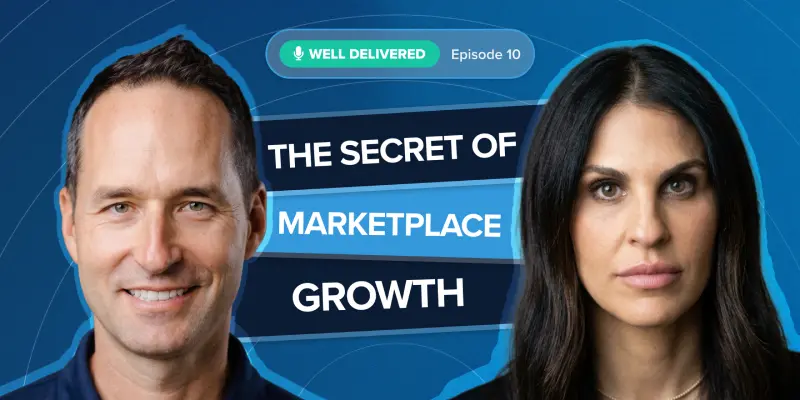
In this episode of Well Delivered, Flowspace CEO Ben Eachus sits down with Katie Horgan, Founder of Bravo CPG, to discuss what scaling brands need to get right before growth creates more complexity than the business can handle.
Katie shares how brands can build stronger ecommerce operations by understanding unit economics, cleaning up SKU-level data, managing margin pressure, and choosing partners that support the realities of growth. The conversation also covers the hidden costs of retail expansion, why automation can't fix broken processes, and how founders can make smarter decisions as they scale.
Key takeaways
- Understand your unit economics before chasing top-line growth
- Margin discipline matters more than revenue
- Clean data and tight processes should come before automation
- SKU complexity quietly drains resources and profitability
- The right partners help you manage exceptions, not just transactions
- Retail expansion adds cost, risk, and operational pressure most brands underestimate
- AI can support operations, but human judgment still drives outcomes
About this guest
Katie Horgan is the Founder of Bravo CPG, where she helps consumer brands strengthen their operations and scale more sustainably. With a background spanning the Marine Corps, fast-growing startups, and consumer brand consulting, Katie brings a practical, operator-led perspective to growth — from unit economics and SKU data to retail readiness and partner strategy.
Ben Eachus
Welcome everyone to another episode of Well Delivered. My name is Ben Eachus. I'm the co-founder and CEO of FlowSpace, a fulfillment solution that helps fast growing brands scale their operations and their fulfillment operations. So joining us on the call, we have Katie Horgan, who has frankly one of the more interesting experiences that we've had on the show. ⁓ she started off as a captain in the Marine Corps. Worked for fast growing direct to consumer companies, ⁓ specifically in the ⁓ food preparation business, and then started Bravo CPG about eight years ago. So welcome, Katie.
Katie Horgan
Thank you for having me.
Ben Eachus
Awesome. Well, as you know, as we have this conversation, I just want to know, tell me a little about your career. So you started in the Marines after college. and then what was the transition to operations?
Katie Horgan
Yeah, ⁓ I did about six and a half years in the Marine Corps and I didn't know what I wanted to do afterwards. ⁓ because the Marine Corps is very much a silo. Like you get in there, like you don't know what kinds of jobs quote unquote real people have and like what the options are. So one common path is to go to business school to kind of take a look around and you're getting a degree, but you're also trying to figure out what your options are. So I I went to Columbia to get my MBA and I actually thought I wanted to do management consulting, which
Would have actually been a terrible path for me. And thank God they rejected me. I tried to get in, did not get the internship, did not get the offers, and somehow found my way into startups. And just by chance, like actually logistics role was the first one I had. So it was kind of by accident. I didn't set out. I actually was trying to change my career path, but you know, life had other plans for me. So it was kind of an accident.
Ben Eachus
Yeah, you just get pulled back in just when you think you're gonna get out.
Katie Horgan
Yes, yeah. It's just just because of different flavor of operations. So I I kind of fell into it, but it was a it was a really good fit for me. It just ended up being a natural extension of what I was doing before. Yeah.
Ben Eachus
That's awesome. Now,
you know, I think one of the interesting things that that I found about just you know our previous conversation, just looking at some of your career path, is in your current role, you get to see operations across many different companies ⁓ at probably different stages of growth. Are there any common mistakes that you see over and over again? Or is everyone a little unique? I'm just curious what your thoughts are on that.
Katie Horgan
⁓ like most of life, the answer is yes, and there's a lot of similar similarities and there's also there's nuances, right? as far as like things that I see, I see a lot of enthusiasm and optimism, which is like part of what I love about CPG. CPG founders are so passionate. A lot of times they have like a personal reason why they started their company or they or they created their products, and it really shows. So like that's a through line that I really enjoy. But I would say like a lot of the things that I see their commonalities.
There's there's many to list here, but the first one that comes to mind is really not knowing your numbers, not being clear about what it costs you to make things and actually get it to the end customer. The unit economics of each channel are different. The unit economics of different products are different. For example, if you're ship shipping something that's in glass and it's refrigerated, that's gonna cost more than a stick pack that you're putting in an envelope, right? So just not knowing your numbers. ⁓ some of this it you know ties into the next point, which is really
Overemphasizing growth ⁓ initially and really just focusing on top line and just worrying about margins later or never at all. I mean, we could have a whole separate conversation about like, in my opinion, the the the things that VC money allows you to do that maybe you shouldn't be allowed to do, which is again focusing on top line and not on margins and and just saying, ⁓ when I get bigger, the economics will be better, I'll get better prices and et cetera, et cetera, et cetera, not realizing that the larger you get you know, you need more people, you have to spend more to stay on shelf, et cetera. So yeah, not knowing your numbers, worrying focusing on the top line, and not on margins. and then again, a list is long, but two other quick ones would be not validating that the market actually wants your product. you know, there's a lot of great ideas out there. They're great to the person in their immediate circle, but is this something that the market actually needs and is willing to pay, to pay the price that, you know, maps to the cost it it ⁓
it takes to make it. And then there's also some stuff on the leadership side, like as people build out their teams. ⁓ over hiring is very common. We see people like I have to have a director or a VP or a C level person for a one million dollar business. That puts a lot of pressure on, you know, your your finances and it also means you end up without a doer. You end up with a lot of leaders and not enough doers. So anyways, the list is much longer, but those are, ⁓ I'd add one more. Not having clean data. ⁓
And and having or and tight processes. And I see a lot of folks trying to introduce technology or AI or even just making hires and you can't build on top of a a system that's not clean or efficient.
Ben Eachus
Sure, or you know, like prematurely trying to automate a bad process because it will still be a bad process. ⁓
Katie Horgan
It it i exactly.
Yes. It's it's really the the fundamentals, like what's the right foundation before you start building on top of it. Make sure the data is clean and your processes are actually processes you want to automate or optimize.
Ben Eachus
the things that you mentioned that I just want to drill in a little more on is the the idea of who the right leaders are at a company at a different scale. Like and as you mentioned, you know, a company at a hundred at one million dollars is very different than a company at 100 million dollars. And I think sometimes it's easy to kind of get enamored with a person with a big company resume or you know like and then they maybe come into a startup and it's totally different, right? There's not all these segmentations of roles and responsibilities. So maybe you can talk a little about like when you started at Plated, you know, you're coming from the, and I know you have maybe had a job before that, but coming from the Marine Corps, you're you're not thrown into, I I'm venturing a guess to say a chaotic environment. ⁓ like, you know, what what made you successful there? Or what are the attributes of su someone who is is kind of built for that type of phase?
Katie Horgan
Yeah. Well, the first thing that actually came to my mind is people. I mean, the people who gave me an opportunity, the people who taught me, you know, be just by sitting next to them taught me. Like that's really like the older I get, the more I'm like, it takes a village and this is a really big village, you know. So I honestly that's that's a huge part of what I would attribute my ability to be successful at
There's actually a lot of parallels between the startup space and the military. The military is actually very entrepreneurial in that they give you no resources. There's literally no plan. It's the blind leading the blind occasionally. Like, you know, you're you're learning as you go and you're adapting to a chaotic environment. That sounds like a startup, right? So I think I had.
I had the ability to flex in those situations and also do hard things. Like hard things can be a variety of different things. They can be physical, emotional, mental, like a tough economic environment. But like just knowing that I could figure it out was something I carried into my job. And I just kept trying. I just kept trying things and and seeing if it worked. And I think that was some of that was actually, you know, built during my time in in the military. So I think that was a huge part of my ability to be successful in addition to people really just giving me a chance and helping me. There was there's one boss that showed up at plated who was I call him a true COO because the term COO gets tossed around, but he was like, you know, seasoned, like in his fifties, had been around the block a few times and he walked into the room and immediately changed the vibe of the organization. He got sales, ops, finance, marketing, everyone to the same on the same page at the table. And he took an interest in me and like made me feel like I could do it.
And that was really important for me.
Ben Eachus
I I think that's such a great point of just the the opportunity to have such a great mentor. And I was fortunate enough to have a few of those folks at the honest company. ⁓ just learned so much from them. and you know, had one particular ⁓ VP who was you know, he we were in operations, but he was an expert at sales and selling things internally to, you know, show that hey, by making these operational changes.
Katie Horgan
Yeah, it's important. Mm-hmm.
Mm-hmm. Mm-hmm.
Ben Eachus (08:24)
We can sell more, we can be more efficient. So such such a great point.
Katie Horgan
Right well, now it's fun because we're at the point in our careers where like we're starting to be able to do that for other people. I'm not all the way yet to the fifty five, you know, you know, that that person who has like really been around the block, but I feel myself shifting into that place where I can actually now help other people come up and that is really rewarding and exciting. It's just another level. Like every you keep going along, you think you're you're good and then there's another level to unlock here, like there's more to learn. So that's been really cool.
Ben Eachus
For sure. And just being
being curious and and ⁓ lear learning from everybody. So ⁓ one of the things that you mentioned too of like knowing knowing your data, right? And you know, I know infrastructure isn't necessarily the things that companies are really focused on super early on, but like what are a couple of things that someone could do to kind of put the framework in place where they can understand that data?
Like are you coming in organizations and there's maybe no QuickBooks or ERP and it's like kind of or like w what kind of situations are you coming into?
Katie Horgan
Yes, I would definitely, and this is outside of our purview, we're focused on ops, but like recommend a strong accountant who knows how to balance your books and also like turn data into information. Like data is just the raw input, information is like the synthesis of that. and then turning that into insights. So definitely always recommend that someone gets a strong accounting team. And this is like a separate sidebar, but like the number of people I see that wanna pay like two, three hundred bucks a month, like you're gonna get what you pay for, and like that's not a place to skimp.
You don't need to overpay, but like get a good resource because that's like the heart of all your data. For us, a lot of times what we walk into is like there's no like master level SKU data, there's no naming convention, there's no organization, you know, item level mastercase inner detail, like the it's just not set up properly. And this is a particularly a problem when we see people trying to use tools for automation like AI. If if they're not t tying back into a data set that is actually correct, the entire thing is gonna
break. Right. So master level SKU data is definitely one. I mean, unit economics, like you can get at this with some of the IMSs and ERPs out there, ⁓ certainly, but if you don't have that, you could do it on a spreadsheet. Like just being clear about what are all the costs that go into actually getting that to the end customer. A lot of people leave out, you know, an allowance for damages, for example, or like the true cost of shipping, what happens if it flexes up twenty or thirty percent because there's an oil shortage, you know, th things like that. ⁓
A lot times we just see people who haven't really thought through all of the components that go into a fully landed cost. So yeah, it's a clean data, ⁓ you clear unit economics and the right finance partner can help you get into that with like a forensic tool.
Ben Eachus
That's such such a great point of just accounting for all of your c true cost, not just some like idealized state. ⁓
Katie Horgan
I do have one more actually, and one would be like SKU rationalization. The number of times I get on a call and I hear someone has hundreds of SKUs and like ninety percent of the revenue is the top ten percent of SKUs. I'm saying, what is the cost of carrying the rest of that stuff? You know, and and planning and planning, right? The inventory cost of carrying, but like all the work that goes into like, you know, making those products a reality and and people are very precious. I understand like that that last ten percent is important, but
There there could potentially be more focus if you if you reduce your SKU list to your hero or your like top whatever percent of products. Yeah.
Ben Eachus
Sure. Yeah, like the just the coordination costs of worrying about a product that's not really driving much revenue, but you still have to store, you still have to pay to actually get it out there. So that's such a great point. And one of the things that that we're noticing, Katie, is that the brands that we're working with, they're growing really quickly. They have great revenue, but they're increasingly smaller teams, right? Smaller teams are doing more.
And a lot of that's possible by leveraging different partners, whether that's co-manufacturer, distributor, fulfillment provider like FlowSpace. ⁓ what I know this is a generic question, but like what should brands be looking for in a partner? Because you can't do it all alone.
Katie Horgan
Yeah.I I can't discount cost. Obviously you have to like know what your budget is and get in the right range. so that's probably number one is like understanding what your budget is, what's a realistic budget. And I will tell you a lot of times I get on the phone with someone and they tell me what they think they're gonna pay for an ops hire. And I say, not quite sure you'd get the quality. So just being clear on like what you act what your organization actually need, what what it cost and what you can afford. Like maybe you can't be 110% on market, but you could be 90% and there's your budget. So playing in the right ballpark is tur in terms of cost is number one. And number two, like I don't think this is outdated yet, regardless of what people tell me, but like a human being, a human being who's going to be a partner to you, who's going to pick up the phone, who's going to give you the benefit of the doubt. Like we say this all the time with three PLs. Like you could go with the bargain price. That is one choice. And sometimes there's reasons to do that. But
Especially when you're smaller and you're growing, you need someone who's gonna pick up the phone, someone who's gonna help you do something custom because you're still figuring out what your standard stuff is. And then in our case, for like a service provider, like fractional ops, like someone who has that ownership mentality, like we will never be exactly the same as a full-time person has equity equity, and we're very clear about that. But ownership is one of our core values. And like if there's an emergency, we're gonna pick up the phone on the weekend, we're gonna make sure that we push all the way through to the finish line, you know, within reason.
And so I think that like that ownership mentality is another huge part of it. ⁓ the last piece I would say is is social proof. So like asking around, like who do you know who have and I used to do this with three PLs when I was doing this work for my clients before I started hiring around me, I would go to the 3PL for a visit and then I didn't really care what client references they gave me. I'd pick a random brand I saw in the warehouse and I would like send them a message on LinkedIn and back channel, right? Like, tell me, you know, tell me what you think about these people. What would you change?
Ben Eachus
I love that. That's a it's a it's a really good point, right? And ⁓ I think, you know, f for us, you know, we we know we deal with a very mission critical piece of the operation, which, you know, we're not shipping on time accurately. Some customers getting impacted and that impacts revenue.
II think what we talk a lot about at the company is we spend a disproportionate amount of time on less than one percent of the transactions and orders, right? Because logistics essentially is exceptions management, right? 99% of the time everything is flowing, but that one percent can really be damaging, right? And I I think exciting part and also the challenging part, right, is as brands are scaling.
But they might not always have a perfect forecast. They might not know where the sales are coming from or what the configurations of the product are. So I agree with you, it is important to be flexible. I know that's a cliche, but it's it's often the brands want to provide you that information. They they just might not know themselves, right? And just figure that out. ⁓ really great point. So it's you know, obviously cost is important, but
Again, someone who's gonna pick up the phone, have us answer your Slack, right? And make it their problem. ⁓ so one of the ⁓ one of the things I wanted to ask you about is ⁓ you have been pretty vocal on on LinkedIn about you know founders kind of misunderstanding the economics of retail distribution. And one of the the trends that we see especially is successful brands that start online want to get into brick and mortar retail or or through distributors. ⁓
What are some of the misunderstandings that you see and maybe some things that you could do to preempt those challenges?
Katie Horgan
Yeah, I feel like one of the things my life is leading up to is writing an expose on on retail. I'm just kidding. I don't know if I want it to be me, but ⁓ the more I learn about it, the more I just am I don't know, a little disheartened and yeah, I don't know what the right word is. ⁓ I I think it's it's it's really like it's just one example of many inside of a business where you can make a decision without understanding the second and third order effects. ⁓ a lot of times, you know.
It's like lot things in life. You chase something, you think it's gonna be great, and you get there and you're like, hmm, this isn't maybe what I thought it was. So say say a brand gets gets the verbal from Target or Whole Fords or whoever, and they say yes without realizing, you know, okay, I've agreed to. ⁓ I'll give you one example. We we are not working with this client, but we we spoke to someone who had gotten an you know approval to get into Target and Whole Foods nationwide at the same time with six months notice. And this brand is gonna break their backs to they have to go find a new manufacturer.
onboard that manufacturer, make the product. I really only have one shot because of the timeline. And then get, you know, basically like all the resources that have to come in to push that to the January launch and all the risk and the money. And then once you get in there, what's the true process staying on shelf there? The promotions, you know, all the free product that you have to provide, the things, the the the money you have to pay to get people to notice your product on shelf.
and then, by the way, are they gonna actually reorder? So that's an example of like you make this huge investment and you really have no idea what the return is gonna be. And if a brand overextends themselves just to get in, and then the return isn't there, ⁓ bec either because they can't pay to play, which is their model, the retailer's model in a lot of cases, or because the reorder doesn't materialize the way they thought it would, especially if you have a product with a shelf life. I mean, you're gonna be sitting on a lot of inventory. So
It's really just ⁓ not understanding the true cost of what happens after you get in retail, staying on shelf and being successful, because the retailers are there to make money. Like they're working with these brands because they're gonna make money off of these brands. So if that product isn't turning and they're not making money, you're out. They don't they don't care. Like it's a business and that's there's nothing cruel about that. It's just factual your business. so if you get kicked out and you've invested all this money to get in there, then what happens? So yeah, I think it's just ⁓ it feels like the finish line, but it's really the start of another race.
This is how would describe retail.
Ben Eachus
Sure, and you know, what we see a lot of times too is just the the working capital requirements change pretty dramatically. And I think planning ahead from that, where you know, your your revenue might be growing very quickly, but you're more cash constrained because you're carrying more inventory and things like that. And then just changing some of the technical systems that are required to to comply with some of the requirements. So yeah, there's there's a lot. It's not just like, hey, let's get yourself. ⁓
Katie Horgan
Mm. Yeah.
Mm-hmm. There's a lot there. Yeah.
Yeah. And and listen, it can be, it is a discovery platform. Like there's obviously like that that is one way to reach customers. I'm not I don't think it should be zero or people should definitely not go into retail. I think it's just understanding what is the cost of that in time, money, effort, risk, exposure. ⁓ and is it the right decision for you right now? It may be the right decision in twelve or eighteen months, you know. but a lot of people feel very
you know, desperate to grab that when it comes along 'cause you don't know if it's gonna come back. Which I I get that. I understand that. Yeah.
Ben Eachus
For sure. ⁓with our remaining time, the the one question I wanted to ask you is what are you excited about in the future? There's a lot of talk about you know what AI will do to supply chain and demand demand planning, purchasing, procurement. Like what what's exciting you in your your daily work ⁓ about the the future?
Katie Horgan
Mm-hmm.
Yeah, ⁓ I let's see. I would say at a high level, what excites me about my job is that it seems to change every 12 to 18 months. You may have experienced this. Like as the company changes, I'm like, what is this? You know, my god, you have to so I I enjoy that part of my job. As far as AI, like I would say like this sounds more dramatic than I need it, but like nothing has really piqued my interest. Like this has professionally.
I can't remember since I can't. This is obviously like a very pivotal time, and I'm curious to see what comes out of it. Obviously, like there's like what's this gonna mean for my company and my business, and how do we get ahead of this? Like, I am not a tech person, ⁓ you know, so it it this is really a stretch for me. So, but I I I would say that I am curious. I am curious to to see how we can use it to to do some of the lower level tactical works that our team can focus on, like the value add piece of it, like the insights. honestly, like I tell people sometimes.
I feel like half of what we do is emotional support sometimes. That's why like you can't automate us away. I mean, if if if your co-man cancels your run, sure, you can do the tactical stuff to go try to find a replacement and this, that, and the other, but you still need someone to like support you and help you war game and figure out what the next step is. And like that human part, I think, is, you know, that's my hope for AI is it's gonna elevate us rather than replay replace us so we can do more with relationships and like provide support to people. I mean, it is
Entrepreneurship is an emotional journey, as you know. and so I I'm excited about the opportunity to focus more on on that stuff with the support of technology.
Ben Eachus
I love that. And you know, I think for us what's exciting is you know, how can we get to a point where we are proactively flagging exceptions or issues before the customer ever has to reach out to us? Right. And I think historically that's always been a goal, but it's been harder to attain that when you're you're looking at millions of transactions. And I ⁓ I'm excited about the coming months of what that means for us and what that frankly means for the merchant experience with fulfillment, right? Like can't can't surface these insights before the merchant even needs to worry about it, before their customer even tells them about it. Right. And that's I I echo your sentiment that this is a very exciting time. ⁓ and we've both been in the space for about the same period of time. And I don't remember being this excited about any kind of technology that's coming. So well
Katie, I I wanna thank you for your time. what a what a tremendous journey that you've had and congratulations on all your success with Bravo C V and look forward to keeping in touch.
Katie Horgan
Thank you. Yeah, thanks for having me.
Ben Eachus
Awesome. See ya.
Katie Horgan
Great, bye.