What is hybrid fulfillment and how does it help enterprise brands scale?

Table of contents
Talk to a fulfillment consultant today
Many ecommerce brands start out with in-house fulfillment. Even Amazon, the ecommerce marketplace giant, began by shipping books from a hallway. As you grow, you need more professional forms of fulfillment, first moving to larger spaces, then warehouses, and eventually, third-party fulfillment centers. These services range from small operations with warehouses and leased space, to global organizations capable of shipping your products to a point nearest the consumer before handing products off to postage and delivery services. Although many businesses assume they have to choose one or the other, some brands find that the best option is a combination of in-house and third-party fulfillment.This hybrid approach allows brands to leverage their own warehouses or fulfillment centers alongside third-party logistics providers (3PL) for a distributed network across sales regions and marketplaces.
What Is Hybrid Fulfillment?
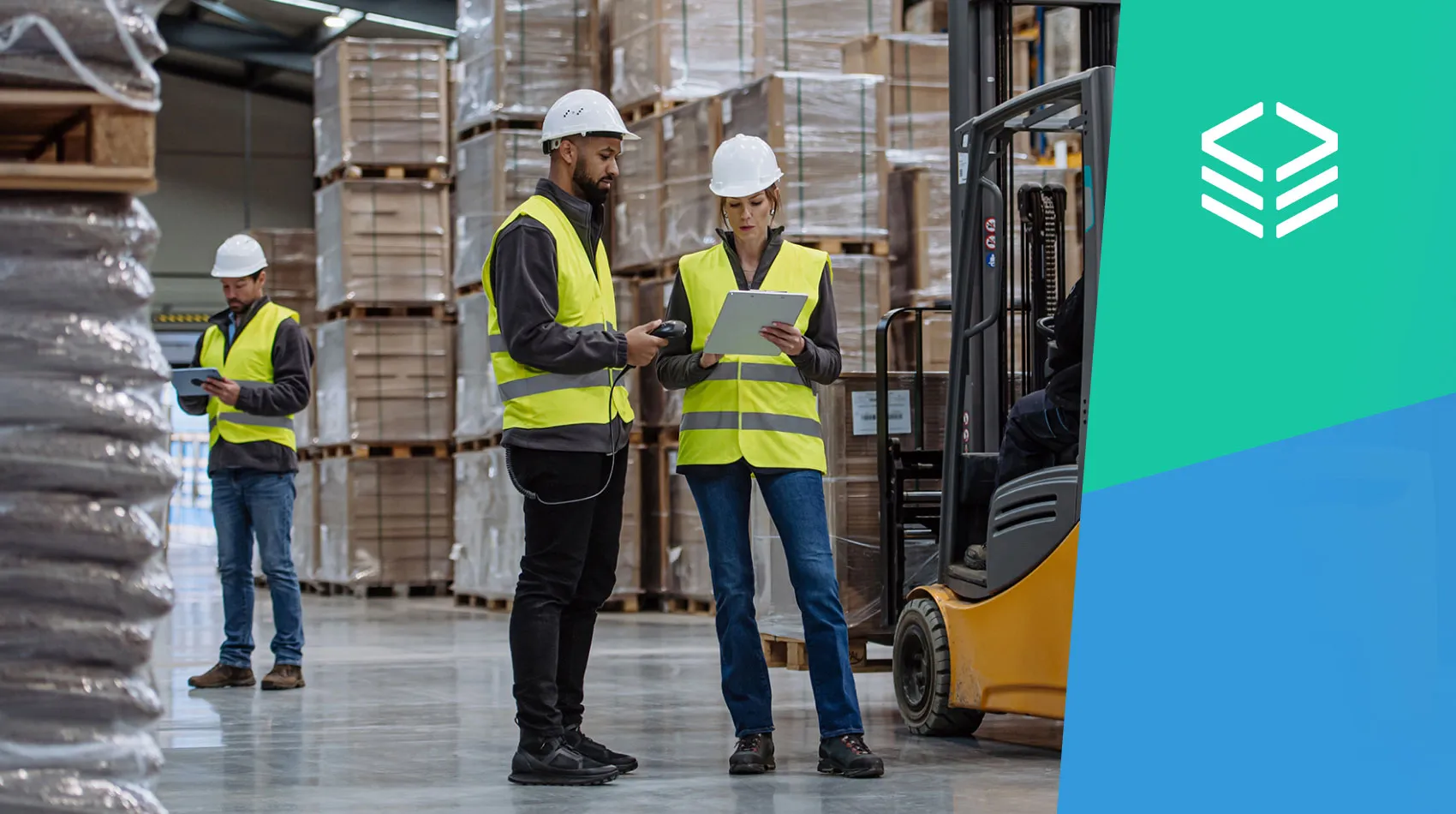
Hybrid fulfillment combines in-house or in-network warehousing with outsourced fulfillment partners or 3PL locations. This model is beneficial for growing brands who need to expand their fulfillment networks, and for enterprise companies that operate their own warehouse and fulfillment locations, but need solutions for additional scale and optimization.Hybrid fulfillment often entails importing products to or manufacturing them in your owned locations and then transporting them to third-party space as needed. In some cases, you may be able to import products directly from your supplier to your third-party locations, which is extremely advantageous in geographically remote locations and countries with different import regulations. At the same time, brands maintaining their own facilities see benefits like the option to direct returns to your warehouse, ship local orders yourself, and hold local stock without fully relying on a 3PL. Hybrid fulfillment models also let you flex your fulfillment capacity as needed by leveraging geographically distributed warehousing, when and where most necessary. Many ecommerce stores already embrace this dual fulfillment method, particularly with Fulfillment by Amazon (FBA). FBA warehouse limits often prevent sellers from keeping their entire inventory with Amazon (which you wouldn’t normally want unless you only sell on Amazon). So, anyone who uses FBA as well as their own warehouse is already employing a form of hybrid fulfillment.
5 Benefits of Hybrid Fulfillment
Hybrid fulfillment isn’t right for everyone. For example, if you lack a warehouse or the infrastructure to manage larger-scale fulfillment but still want to expand, an outsourced-only approach could temporarily allow you to scale without investing much-needed capital in warehousing. That being said, hybrid fulfillment offers numerous advantages for businesses, especially in terms of control, network resilience, and cost management.
1) Build Network Resilience
Relying on a single supplier or warehousing point strains your network, as any logistics problems affect every order from your organization. When you diversify between geographic locations, warehousing solutions, and your own logistics or a 3PL, you face fewer of these issues because you can usually source inventory from a different warehouse, reroute the order, or find another workaround.
2) Reduce Time in Transit
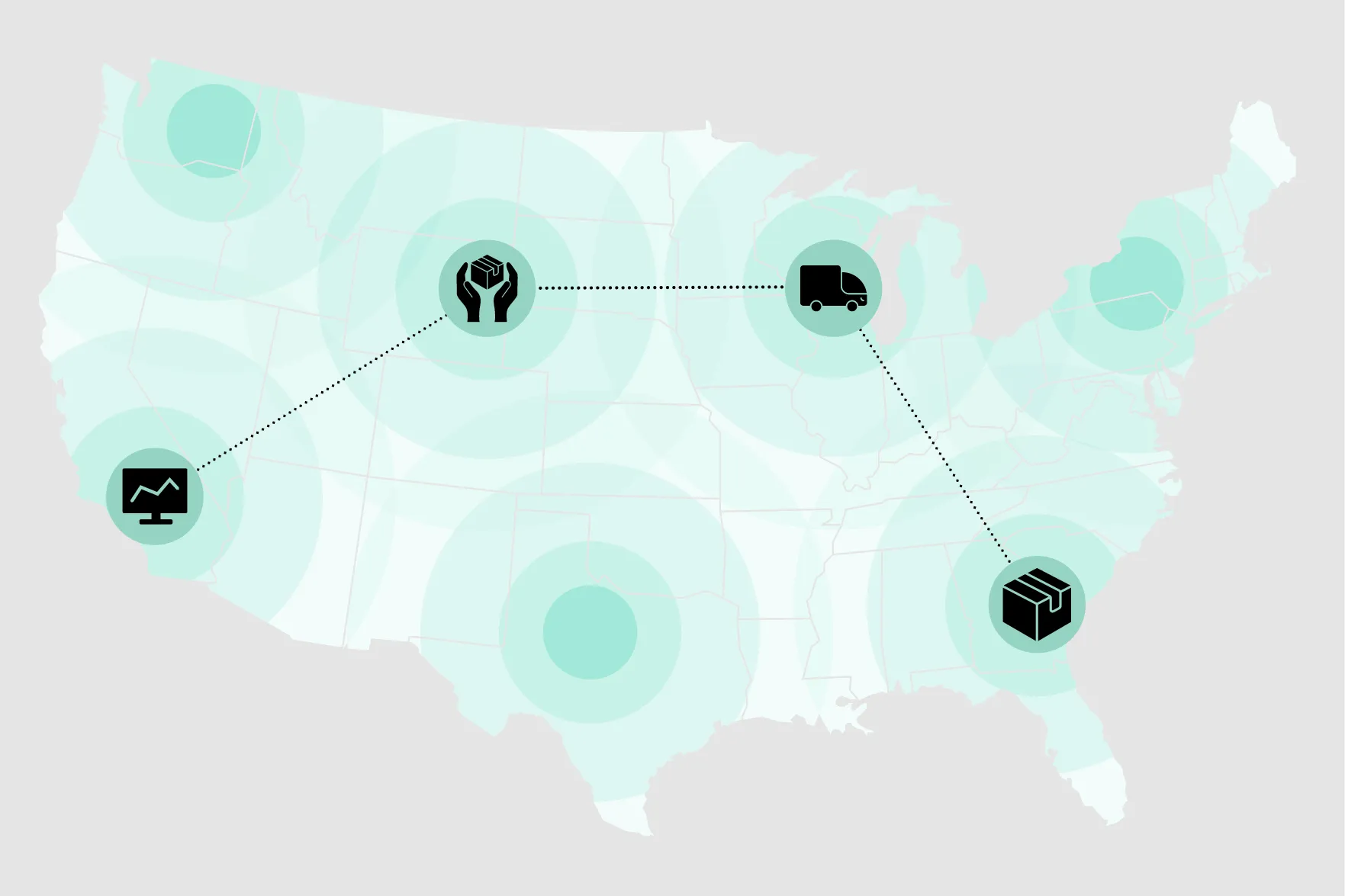
Shipping from a single warehouse produces an off-balanced customer experience: Buyers nearest to your headquarters enjoy fast, reliable shipping, while those farther away have to contend with longer, more expensive fulfillment. Multiple warehouse locations allow you route orders to the fulfillment location closest to the customer, providing a consistent delivery experience for every shopper—no matter the distance. Delivery experience is a major contributor to the ecommerce customer experience. Most shoppers prioritize fast over free shipping, with some urban consumers expecting same-day delivery. Speed is so important that, according to McKinsey & Company, 34% of browsers are willing to abandon shopping carts if delivery estimates are more than two days (this is in part due to Amazon Prime making free two-day delivery the norm).In order to achieve fast delivery, you need to be able to distribute your inventory across a wide geographical range. This isn’t feasible to do all in-house, but you may want the benefit of more logistical control over your busiest and most lucrative hubs. Hybrid fulfillment handles this issue beautifully.
3) Cut Shipping Costs
In addition to achieving fast shipping, a smarter logistics network will help you deliver items more economically. The vast majority of shoppers (90%) say that free shipping is their top incentive to shop more.If you try to meet shipping and delivery expectations from a single warehouse, prepare to spend considerably to get products to consumers on time. Even if you force customers to wait longer for products (not recommended), shipping over greater distances is expensive on its own. Distributing your inventory geographically allows you to reduce your base cost of shipping, deliver on time without leveraging more expensive methods, and save on other shipping expenses.
4) Increase Sales
Fast shipping is crucial to your conversion rate. In fact, some 60.7% of customers stated they’ll avoid placing an order if they’re unable to see delivery times. Conversely, 30% of those surveyed were more likely to buy online if shipping times were within two to three days. Capitalize on these statistics by advertising delivery times in shopping carts, marketing, ads, and newsletters. Offering free, fast shipping is also a strong incentive for people to join loyalty programs, which encourages repeat purchases. Relatedly, fast shipping affects long-term customer loyalty: In one Convey, Inc. survey of over 1,500 shoppers, 98% reported shipping experiences impact their loyalty, with 84% stating they’re unlikely to return to a store after a negative shipment experience. Through hybrid fulfillment, you can stay on top of fulfillment timelines, track and trace orders, and lower fulfillment costs to drive repeat customers.
5) Better Customer Experience
It’s no longer enough to deliver things fast, you need to do it for free, reliably, and on-time. Having a hybrid fulfillment network helps in all of these aspects, which ultimately result in a better overall buyer experience.Your business will need to adapt to keep up with these increasing demands. Using a hybrid fulfillment system speeds up delivery by diversifying geographic locations, relying on third parties to fill logistical gaps, and ensuring your infrastructure and support systems are strong.
Introduce Hybrid Fulfillment To Your Enterprise Brand
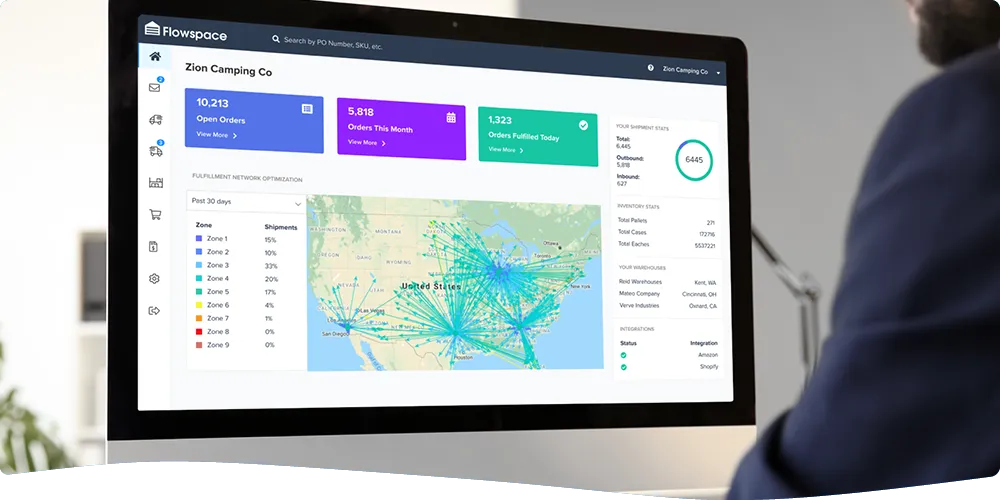
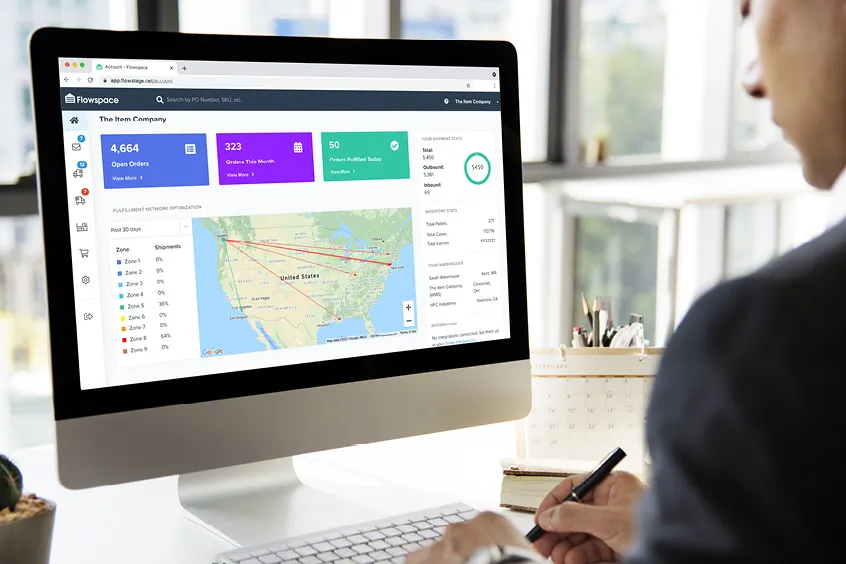
Hybrid fulfillment is a smart choice whether you expand nationally or globally. For it to be fruitful though, you need robust software solutions with synchronized data so your inventory and order streams are aligned across channels.A tested solution that encompasses these requirements is a combination of nationwide fulfillment networks like Flowspace and a software integration across all your warehouses, channels, and 3PLs, like Flxpoint. Flowspace is a nationwide fulfillment network with over 130 warehouse locations across the United States, capable of identifying and fulfilling from locations most optimal for your brand and its customers. Leveraging that network lets you use data to distribute inventory based on geographic sales and then deliver from the nearest warehouse point. Meanwhile, Flxpoint integrates those warehouses with your own storage space, consolidating inventory, sales, and orders into a single place. With near real-time inventory management, you’ll be able to update sales and inventory levels across channels while automating warehouse selection to fulfill orders at the point nearest to the buyer, prevent orders from being picked twice, etc.
Wrapping up—Take the Hybrid Approach to Scale With Ease
Fulfillment becomes more important (and complex) as your business starts to scale. Often, ecommerce stores need 3PL solutions to offer the fast, low-cost shipping needed to drive customer satisfaction. At the same time, many retailers benefit from maintaining their own warehouse and inventory stock.A hybrid approach to fulfillment lets you enjoy the benefits of both methods by leveraging your warehouse where it’s most cost-effective, and moving to third-party suppliers and their warehouse networks to supplement that fulfillment.
Last Updated
category
Related articles







Start simplifying fulfillment with Flowspace today
Discover how Flowspace can simplify fulfillment and help your brand scale faster, with no long-term contracts or hidden commitments.
