7 ways to reduce fulfillment costs during peak season
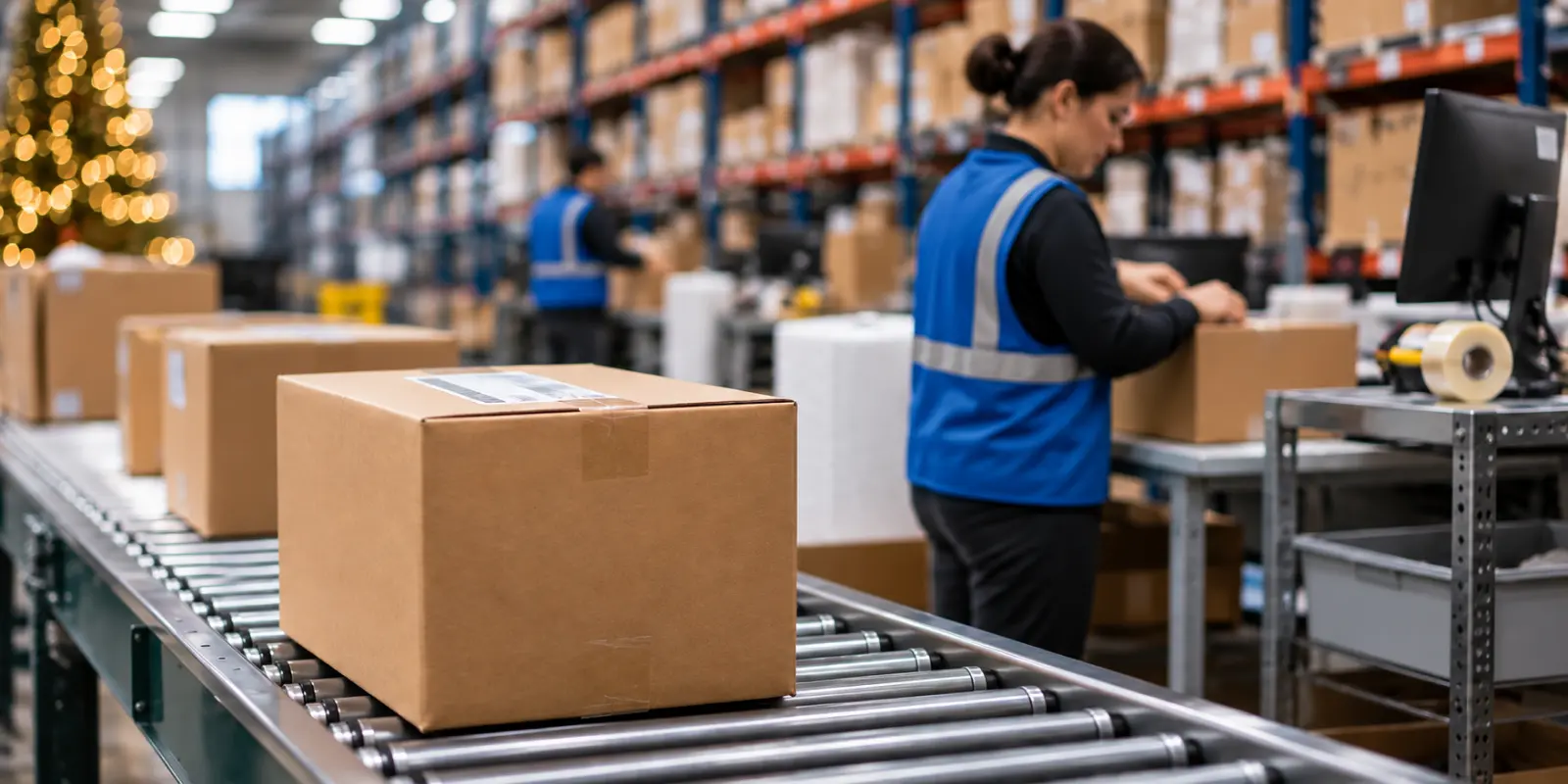
Table of contents
Talk to a fulfillment consultant today
TL;DR
- Peak season can squeeze margins. Shipping surcharges, oversized packaging, and fulfillment inefficiencies can drive up costs.
- Smarter shipping means more savings. Rate shopping, strategic inventory placement, and right-sized packaging help reduce expenses.
- Efficient fulfillment protects profits. Fewer split shipments, better inventory allocation, and fewer errors help eliminate unnecessary costs.
- Flowspace helps brands save. Automated rate shopping, real-time inventory visibility, and reliable fulfillment help brands control costs during peak and beyond.
More orders should mean more revenue. But during peak season, higher sales volumes can also bring higher fulfillment costs.
Shipping surcharges are an obvious culprit. Yet costs can add up elsewhere, too: an oversized carton, a split shipment, an expedited delivery that could have been avoided, or an inventory shortage that requires extra handling.
The good news? Not every expense is outside your control.
Here are seven practical ways to reduce fulfillment costs and protect your margins during the holiday rush.
Why do fulfillment costs increase during peak season?
Peak season brings higher order volumes, tighter delivery deadlines, and greater demand for warehouse and shipping capacity. While some costs rise because of seasonal surcharges, others increase with fulfillment activity or operational inefficiencies.
The biggest cost drivers include:
- Shipping: Carrier demand surcharges, additional handling fees, and higher costs associated with package dimensions, destinations, or expedited services.
- Warehousing and storage: Additional inventory may require more storage space, receiving, and handling, increasing overall warehouse expenses.
- Labor and order fulfillment: More orders mean more picking and packing activity. Brands operating their own warehouses may also face overtime and temporary staffing costs, while some 3PLs charge additional seasonal or special handling fees.
- Operational exceptions: Split shipments, inventory discrepancies, fulfillment errors, and last-minute expedited orders can create additional handling and transportation expenses.
Not every cost increases on a per-order basis. But even when fulfillment rates stay the same, unnecessary expenses can add up quickly across thousands of orders.
Understanding where those costs originate helps brands identify opportunities to protect their margins.
For a breakdown of seasonal carrier fees, see our 2026 peak season shipping surcharge guide.
Solutions for managing peak season shipping surcharges
Peak season shipping surcharges are unavoidable, but brands can influence how much they spend on individual shipments.
These three strategies can help reduce exposure to unnecessary shipping expenses.
1. Use automated rate shopping to reduce shipping costs
The lowest-cost shipping option isn't always the same from one order to the next.
Package dimensions, destination, delivery requirements, and carrier pricing all influence the final cost. During peak season, additional surcharges make those differences even more important.
Automated rate shopping compares eligible shipping services for each order and selects the lowest-cost option that meets its delivery requirements.
Instead of routing every shipment through a default service, brands can make use of available pricing across carriers without manually reviewing each order.
For example, a shipment that requires delivery within three days may have several eligible service options at different prices. Rate shopping helps prevent the brand from paying for a more expensive service when a lower-cost alternative can meet the same commitment.
Flowspace incorporates automatic multi-carrier rate shopping directly into its fulfillment operations, combining access to high-volume shipping rates with service selection at the order level.
What to do now: Review your shipping service rules and identify whether orders are being routed through unnecessarily expensive options.
2. Optimize inventory placement to reduce shipping distances
Where an order ships from can have a substantial impact on what it costs to deliver.
Longer shipping distances increase transportation costs and may require more expensive service options to meet delivery expectations.
Storing inventory closer to the customers who purchase it most frequently can help brands reduce shipping distance and improve delivery economics.
But distributing inventory across more warehouses isn't automatically cheaper. Additional storage, replenishment, and inventory transfer costs need to be considered alongside potential shipping savings.
During peak season, relocating large amounts of inventory may not be practical. Brands can still examine where orders originate, identify locations creating unusually expensive shipments, and use those findings to inform upcoming replenishment decisions and optimize their networks.
What to do now: Review order destinations and fulfillment locations to identify where shipping distance is increasing costs. Use that data to guide inventory placement decisions beyond peak.
3. Right-size packaging to avoid unnecessary fees
Shipping a small product in an oversized box can cost more than necessary.
Carriers calculate shipping charges using dimensional weight, which considers package size alongside actual weight. Certain dimensions can also trigger additional handling or oversized-package charges.
This makes carton selection particularly important during peak season.
Brands should review commonly shipped products and identify opportunities to use appropriately sized packaging without compromising product protection.
Even relatively small improvements in package dimensions can matter when repeated across high order volumes.
What to do now: Review packaging for your highest-volume SKUs and identify cartons that consistently contain excessive empty space or trigger avoidable fees.
How to reduce additional fulfillment costs during peak season
Shipping rates are only part of the equation.
Inventory availability, order routing, warehouse accuracy, and delivery decisions can also affect cost per order. These operational factors deserve just as much attention when volumes increase.
4. Avoid unnecessary expedited shipping
Expedited shipping can be necessary to meet a delivery promise. It can also become an expensive workaround when orders aren't processed on time.
For example, an order that could have shipped using a standard service may require a faster, more expensive option if it sits unfulfilled for too long.
To reduce these situations, brands need visibility into order processing times, shipping cutoffs, and approaching deadlines.
Start by reviewing:
- Orders approaching their required ship-by dates.
- Orders delayed by inventory availability or fulfillment exceptions.
- Shipping services being selected and whether those services are necessary.
Not every expedited shipment can be avoided. The goal is to prevent operational delays from creating additional shipping expenses.
What to do now: Identify aging orders and review why they're being delayed. Prioritize resolving issues that could lead to more expensive shipping or missed delivery commitments.
5. Minimize split shipments
A customer places one order, but receives two or three separate packages.
Sometimes that's unavoidable. Inventory may be stored across multiple locations, products may require separate handling, or shipping items together could delay delivery.
But unnecessary split shipments introduce additional packaging, handling, and transportation expenses.
For brands with multiple fulfillment locations, inventory visibility is particularly important. Knowing which products are available at each warehouse helps teams make more informed routing decisions.
Consider a customer purchasing three products. If one warehouse has all three in stock, fulfilling the complete order from that location may cost less than shipping items separately from two warehouses.
However, consolidation isn't always the cheapest option. Shipment weight, distance, packaging requirements, and delivery expectations all affect the decision.
What to do now: Review the frequency and cost of split shipments, particularly for frequently purchased product combinations. Determine whether inventory positioning or routing adjustments could reduce unnecessary splits.
6. Improve inventory allocation across sales channels
Peak season often brings competing demand across DTC, marketplaces, wholesale, and retail.
A product selling quickly through one channel may also be needed to fulfill an upcoming retailer order or marketplace commitment.
Without clear inventory allocation rules, brands risk using stock intended for one channel to fulfill another. That can lead to shortages, delayed orders, manual workarounds, and potentially expensive inventory transfers.
Consider a brand preparing for a major retail replenishment while running a DTC holiday promotion.
If all available inventory is treated as one shared pool, strong DTC sales could consume stock needed to meet the retailer's commitment.
Inventory allocation allows brands to reserve available stock for specific channels, orders, or priorities.
Flowspace's Inventory Allocation Pools help brands manage omnichannel fulfillment and protect inventory across their key channels. Teams can establish channel-specific pools, set priorities, and monitor available inventory through the same fulfillment platform.
This reduces the need for manual coordination and helps prevent one channel's demand from disrupting another's commitments.
What to do now: Review inventory availability against upcoming promotions, marketplace demand, and retail commitments. Identify high-priority SKUs that may need dedicated allocation.
7. Reduce fulfillment errors and costly rework
A fulfillment mistake rarely ends with the cost of picking the wrong product.
An incorrect shipment can lead to additional warehouse handling, replacement shipping, customer service requests, and potentially returns or retailer chargebacks.
During peak season, when order volumes are elevated and delivery timelines are tight, these mistakes can become particularly expensive.
Reducing errors starts with reliable inventory data and consistent warehouse processes.
Brands should monitor:
- Picking and packing accuracy
- Inventory discrepancies
- Orders requiring correction or reshipment
- Recurring exceptions tied to specific products or workflows
The objective isn't simply to move orders through the warehouse faster. It's to fulfill them accurately the first time, minimizing the additional work and expense of correcting mistakes.
What to do now: Look for recurring fulfillment errors and investigate their causes. A problem affecting a frequently ordered SKU could generate significant avoidable costs if left unresolved.
How much could your business save on fulfillment?
The financial impact of fulfillment optimization depends on your order volume, shipment characteristics, existing rates, and operating processes.
For one Flowspace food and beverage customer, automated shipping rate shopping generated the following results over a one-month period:
This example illustrates how shipping service selection can create meaningful savings at scale.
The same principle applies to other fulfillment expenses. Reducing unnecessary split shipments, preventing reshipments, or improving inventory allocation may lower costs that otherwise accumulate across thousands of orders.
Actual results will vary. The best place to start is by examining your own shipping and fulfillment data to identify which expenses are both significant and within your control.
Reduce peak season fulfillment costs with Flowspace
Peak season doesn't have to mean accepting every increase in fulfillment costs.
Flowspace combines fulfillment technology, nationwide warehouse coverage, and hands-on operational support to help ecommerce and omnichannel brands ship efficiently while maintaining reliable execution.
With Flowspace, brands can:
- Reduce shipping expenses through automatic multi-carrier rate shopping and access to high-volume rates.
- Make smarter inventory decisions with real-time visibility and inventory allocation controls.
- Optimize fulfillment locations using order and destination data to help reduce shipping distances.
- Avoid costly fulfillment issues through accurate warehouse execution, operational visibility, and hands-on support.
Whether you're managing a holiday surge or evaluating ways to improve fulfillment economics year-round, the right operational decisions can make a meaningful difference.
Find out how much your brand could save on fulfillment. Talk to an expert today.
Frequently asked questions about peak season fulfillment costs
How can businesses reduce fulfillment costs during peak season?
Businesses can reduce peak season fulfillment costs by comparing shipping rates, optimizing packaging, improving inventory allocation, and minimizing fulfillment errors. Monitoring orders and inventory in real time also helps teams identify avoidable expenses before they escalate.
How can brands manage peak season shipping surcharges?
Brands can manage peak season shipping surcharges through automated rate shopping, appropriately sized packaging, and strategic inventory placement. While seasonal fees cannot always be avoided, these strategies can help lower overall shipping expenses and limit exposure to certain additional charges.
What are the biggest drivers of ecommerce fulfillment costs?
Common ecommerce fulfillment costs include shipping, storage, receiving, picking and packing, packaging materials, and returns processing. Additional expenses can arise from split shipments, inventory transfers, fulfillment errors, and expedited shipping. The impact of each expense depends on a brand's products, order volume, and fulfillment operations.
Can brands still reduce shipping costs once peak season has started?
Yes. Brands can review shipping service selection, packaging, order processing delays, and fulfillment exceptions while peak season is underway. Larger changes, such as relocating inventory or redesigning fulfillment operations, typically require more planning and may be better suited for the next peak season.
Last Updated
category
Related articles




Start simplifying fulfillment with Flowspace today
Discover how Flowspace can simplify fulfillment and help your brand scale faster, with no long-term contracts or hidden commitments.
