What SubSummit revealed about scaling physical subscription
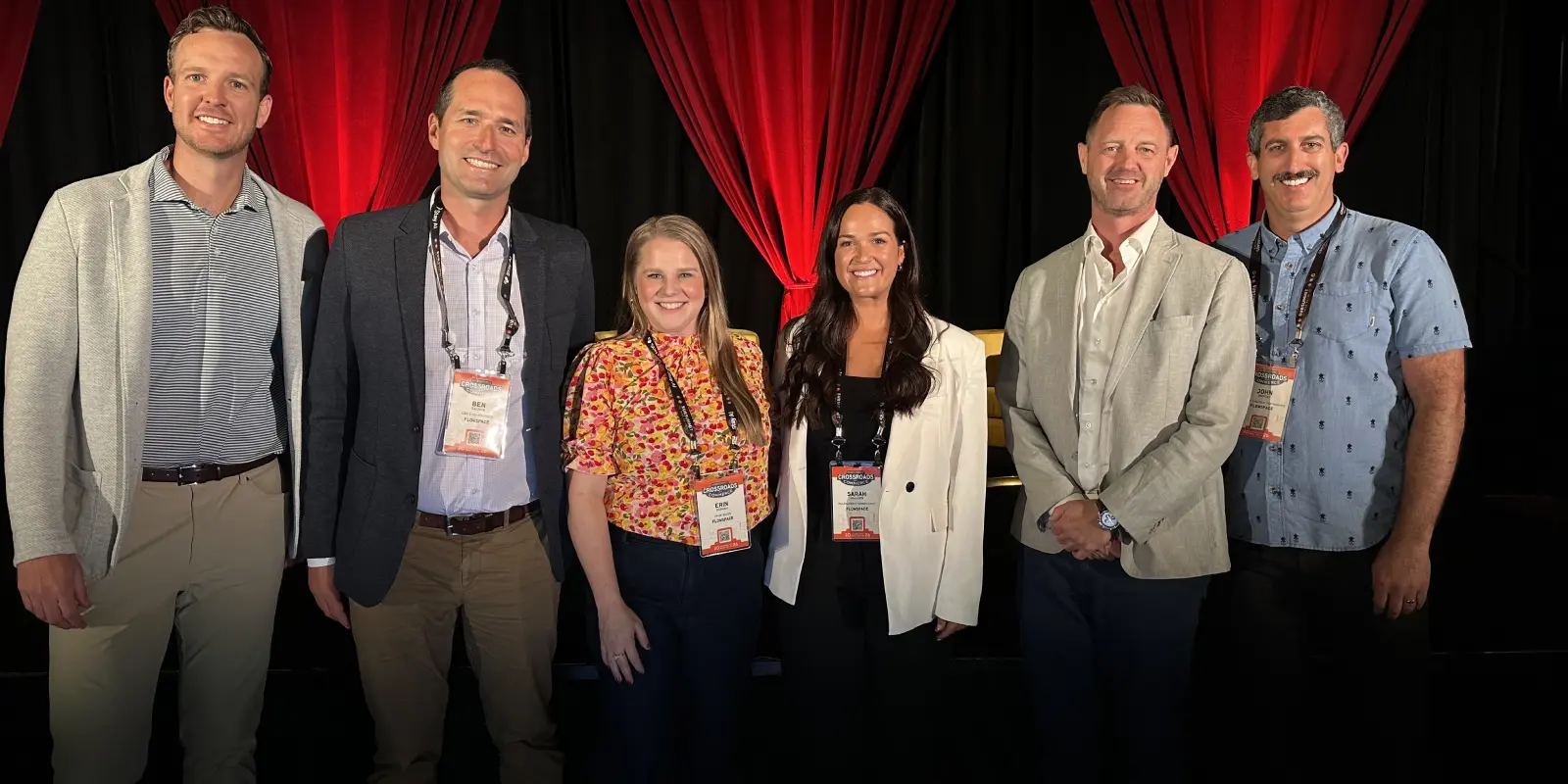

Table of contents
Talk to a fulfillment consultant today
At SubSummit, we took to the stage, hosted a dinner, and spent two days in deep conversation with subscription commerce brands. Here's what we learned and why it matters for your fulfillment strategy and every subscription brand serious about scaling in 2026.
SubSummit is small by design (and that's the point)
SubSummit is not a trade show in the traditional sense. It's an intimate gathering—a few thousand people who are serious about subscription ecommerce, gathered in round tables and 1-on-1 conversations that actually go somewhere.
That intimacy is exactly what makes it valuable. Brands speak candidly. And the patterns that emerge across dozens of conversations paint a clearer picture of where the industry actually is, not where it says it is.
This year, Flowspace came with a presence: a hosted dinner, two days of floor conversations, and a panel session we were proud to be part of. What follows is what we took away.
Our session with Reel Paper and Fabula Coffee: The operational reset
Our panel session, "The Operational Reset: What It Takes to Scale Physical Subscription in 2026," brought together two founders who have lived exactly what we were there to discuss: Joe Stilphen, CFO/COO of Reel Paper and HoldOn, and Lars Spaten, CEO and founder of Fabula Coffee.
The provocation we built the session around: most subscription commerce brands have cracked customer acquisition. Very few have cracked what comes after it. That gap is largely an operational problem—and we explored it through four questions.
Question 1: What's the one operational problem nobody warned you about?
The most consistent answer, across the panel and across the show floor, was some version of the same thing: the gap between demand growth and operational readiness.
Physical subscription creates a tension that doesn't exist in most business models. You cannot run out of inventory—subscribers expect fulfillment on a recurring schedule. The instinct is to over-stock as protection, but that ties up working capital that should be fueling growth. The real discipline is optimizing the cash conversion cycle: minimize days of inventory on hand, negotiate longer terms with suppliers, collect from customers as fast as possible. That gap between money going out and money coming back in is what constrains growth more than almost anything else.
“We're blessed with a negative cash conversion cycle — meaning we get the money in before we pay it out. We have roughly seven to ten days of inventory. It's a superpower.” - Lars Spaten, CEO and founder of Fabula Coffee.
The second theme was visibility. Brands that chose early fulfillment partners based on cost—rather than operational transparency—found themselves making decisions in the dark. No insight into delivery timing, fill rates, or performance metrics. That's not just a logistics problem. It's a working capital problem. The truth about subscription box logistics: a great product gets someone to buy. Operational discipline is what keeps them for 1,000 days.
Question 2: What was the hardest decision that pushed you through to the next stage?
Recurring operational problems are easy to patch. A workaround here, a manual fix there. But the same issues keep surfacing—and at some point, the only path forward is the harder call: re-implement, switch providers, rethink the model. The founders who navigate inflection points well look at the data honestly, even when it's uncomfortable. Decisions become hard when the data runs out, not when the stakes go up.
Running a multi-brand, multi-channel business at significant scale with a single full-time operations employee sounds unlikely. Among brands that have made the right partner and technology choices, it's the reality. Order in, shipped in 48 hours, no one on the team touches it.
“We have one full-time operations employee [...] He's able to manage a multi-channel, multi-brand business through one platform, and he has total visibility at all times. That's what has allowed us to scale to this point without adding tons of headcount.” - Joe Stilphen, CFO/COO of Reel Paper and HoldOn
A strong ecommerce fulfillment strategy isn't just about cost per shipment—it's about absorbing operational complexity so the team can focus entirely on growth.
Question 3: What should founders not wait on?
Validate that you have a viable business model, and do it earlier than feels necessary. By month six or twelve, you know enough: how often customers come back, how much they spend, how long they stay. If the unit economics don't work at $10M, they won't fix themselves at $50M. The discipline is stress-testing that reality before you've committed all your capital to getting there.
On the operational side: get your S&OP process right. Truly synchronizing demand to supply is the foundation that makes everything else possible. The brands that invest in it early find that a remarkable number of other problems simply disappear—and their DTC operation can run on autopilot, freeing the team for the channels that actually require human attention.
Question 4: What separates brands that scale from brands that stall in 2026?
The panel's answer came down to three things: great product, great marketing, and understanding the economics—which is the most overlooked and the most important.
Specifically, two superpowers. The first is a strong LTV:CAC ratio—acquiring customers at significantly less than their lifetime value, leaving gross profit to fund overhead and growth.
The second is a negative cash conversion cycl —getting paid before you pay out, so growth funds itself without constant capital infusions. One of the fastest companies ever to reach $1 billion had both simultaneously. That is not a coincidence.
You can survive with one of these working in your favor. But if you have neither, no great product or marketing will save the business.
Beyond the economics: keep the main thing the main thing. About 80% of revenue comes from 20% of SKUs. Optimize that core ruthlessly instead of chasing new products and channels that create complexity without proportional return. And outsource what isn't yours to own.
What we heard beyond the session
The dinner and floor conversations filled in the rest of the picture.
Shipping costs are a real and present pressure. Fuel surcharges have increased significantly, and brands are actively looking for partners who can help reduce per-shipment costs through smarter zone strategies and network positioning.
The bar for customization in subscription box logistics remains surprisingly low across the industry. Brands are being told that custom inserts, branded packaging, and unique configurations aren't possible or practical. For subscription brands, where the unboxing moment is a retention touchpoint, this is a strategic limitation being accepted as a given when it shouldn't be.
And post-transaction visibility—what happens after an order ships—remains an underdeveloped layer of most ecommerce fulfillment strategies. Zone-level transit data, delivery performance, order accuracy rates: information that directly impacts subscriber retention, and most brands are operating without it.
What we're taking back
SubSummit reinforced something we believe deeply: subscription box fulfillment is not a commodity. For subscription brands, it is one of the highest-leverage operational decisions you will make—and most brands are underinvested in getting it right.
The brands that scale treat their fulfillment partner as a strategic asset. They demand visibility and expect flexibility. They require technology that integrates with their stack and adapts as they grow. And they work with partners who are proactive—surfacing problems before they become crises, and bringing operational intelligence that founders didn't know to ask for.
That is what we showed up to SubSummit to talk about. And based on the conversations we had, it's exactly what the subscription commerce market needs to hear.
Flowspace is a fulfillment platform built for brands that are serious about growth. If you're a subscription brand evaluating your fulfillment strategy, we'd like to talk.
Last Updated
category
Related articles






Start simplifying fulfillment with Flowspace today
Discover how Flowspace can simplify fulfillment and help your brand scale faster, with no long-term contracts or hidden commitments.
