How to use Flowspace to run your FBA business


Table of contents
Talk to a fulfillment consultant today
There’s no doubt about the fact that Amazon is among the largest e-commerce platforms, gaining new sellers everyday, with billions of products made available to customers at the click of a button. However, it’s not the right sales channel for every business, and its FBA (Fulfillment by Amazon) service might be a good fit for some merchants and not others. Before committing to what can be a complex relationship, it’s best to determine Amazon FBA pros and cons and make a choice that makes the most sense for your business.
FBA Pros: How It Benefits E-Commerce Companies
As the world’s largest retailer, Amazon’s FBA program has grown exponentially over the years. E-commerce companies big and small, seek out the FBA benefits that have helped brands over the years. The biggest pros of the program are that it’s a time-saving solution with immediate brand recognition, along with widespread consumer use of the Amazon platform.
Time-Saving Solution
One of the biggest Amazon FBA program benefits is the time it saves growing e-commerce businesses. In the beginning, when orders and inventory are low, launching an e-commerce brand may begin for some as a secondary source of income. However, this can quickly shift from slow and steady to fast and spiking in a matter of months.
When a surge in sales occurs, the Amazon FBA platform takes care of the logistical management of packaging, shipping, and handling customer reviews and questions. When all of this is taken care of by a third party, it allows businesses to concentrate on building their brand and performing product research.
Although Amazon’s FBA program is a popular option, it’s not the only e-commerce fulfillment solution available. At Flowspace, we can also alleviate this part of the process for e-commerce businesses, including those selling on Amazon, but without added-on program fees, Amazon FBA shipping charges, and storage expenses.
Access to Amazon Prime Customers
Another one of the biggest FBA benefits is access to Amazon Prime customers. Amazon is already a well-known brand with millions of Prime customers who count on free, two-day shipping. When you list products with FBA, they can become eligible for this incentive, and those that qualify have their Amazon listings appear with the Prime logo.
This level of credibility and recognition is an advantage when using the Amazon FBA platform, though sellers pay for this accessibility as part of their business expenses.
No-Hassle Customer Returns
Part of the benefit of using Amazon FBA is that Amazon associates handle customer returns. This can take up a significant part of a seller’s workday, making it a convenient task to delegate to a third party. For example, it could take part of a day to help customers with lost or damaged orders, which then delays shipping and preparing new packages. With FBA, customers have access to return services 24/7.
However, there is an FBA processing fee per return to keep in mind as well. Paying attention to customer reports and identifying repeated problems can help prevent an increased number of returns and consequently, decrease the number of fees and lost sales.
Buy Box Eligibility
Earning “Buy Box” status is important for an Amazon FBA seller because the offer is posted near the top of product detail pages. To become the featured offer, sellers must meet performance-based requirements, and it is only available to those with a Professional selling account.
Earning the coveted spot helps to drive more sales as it lets your product stand out from other competitors and incentivize customers to buy. Visibility of products is an important part of building a strong online presence, and this added boost can really make a difference.
FBA Cons: Why Companies Should Consider Alternatives
There’s no denying Amazon is a leader in the e-commerce space, but as the platform continues to grow so do fees, policies, and other benefits that may not be as alluring as they once were. Therefore, it’s valuable to explore alternative solutions and consider how much the cons of the program may outweigh the FBA benefits.
Missed Growth Opportunities
Since all customer information flows through the Amazon FBA platform, this means you don’t have access to any customer information to use for branding or advertising campaigns. Though Amazon offers marketing services, there is an FBA fee and guidelines to follow that may not present as much flexibility or ability to connect with and understand your customers.
It takes time to build up a loyal customer base. Without having customer data to build upon, you miss out on opt-in opportunities for email subscriptions or engagement on social media. There’s also the missed opportunity of segmentation and becoming attuned with buyer behavior to understand your audience on a more personalized level.
Strict Receiving Guidelines
When preparing your products for FBA shipping, you must follow Amazon’s guidelines when sending your inventory to one of their warehouses. Each item you package must be prepped according to its product type. There is a long list of packaging and prep requirements that includes everything from box type and bubble wrap criteria to abiding by drop tests and expiration dates.
If and when these guidelines are not upheld to Amazon’s standards, the business may incur unplanned services fees, which is calculated per unit and can range from a $.20 per-unit charge for a missing label, all the way up to $150 per-unit charge for a critical safety problem with regards to the box, product, or pallet. Additionally, Amazon may all-out reject your products, which can cause delays in availability for your customers, resulting in lost sales.
Setup and Scaling Fees
Many starting on the Amazon FBA platform may be overwhelmed by the amount of fees associated with the program. Every step has its own costs. For example, there are monthly plan fees, monthly storage fees, and fees for tools and API integration. The cost of convenience and unlocking different parts of the platform come at a price. Oftentimes, this isn’t accurately accounted for and can quickly add up, altering the profits of a business.
Stagnant Inventory and Long-Term Storage Fees
If there’s a dip in sales or a surplus in inventory due to over-ordering or wrongly predicted sales seasons, it can be costly to store it. Inventory that’s been in a fulfillment center longer than 365 days will incur a monthly long-term storage fee in addition to the monthly inventory storage fee Amazon already charges.
This rate is $6.90 per cubic foot or $.15 per unit, whichever is greater. Although there are ways to reduce stagnant inventory, these strategies are also time-consuming. Plus, if you decide to have items shipped back to you or disposed of, there’s a fee for that, too. Furthermore, if you remove items that would be subject to long-term storage fees at the next inventory cleanup date, you can’t send more of these types of items for three months after.
Finding an E-Commerce Fulfillment Solution That Suits You
Amazon is a fully integrated system that many sellers use everyday. It has grown and continues to grow, which has its own pros and cons as well. The competition on the platform along with the changing policies and fees set forth by Amazon has caused many to ask “Is Amazon FBA worth it?” and consider other routes for e-commerce fulfillment.
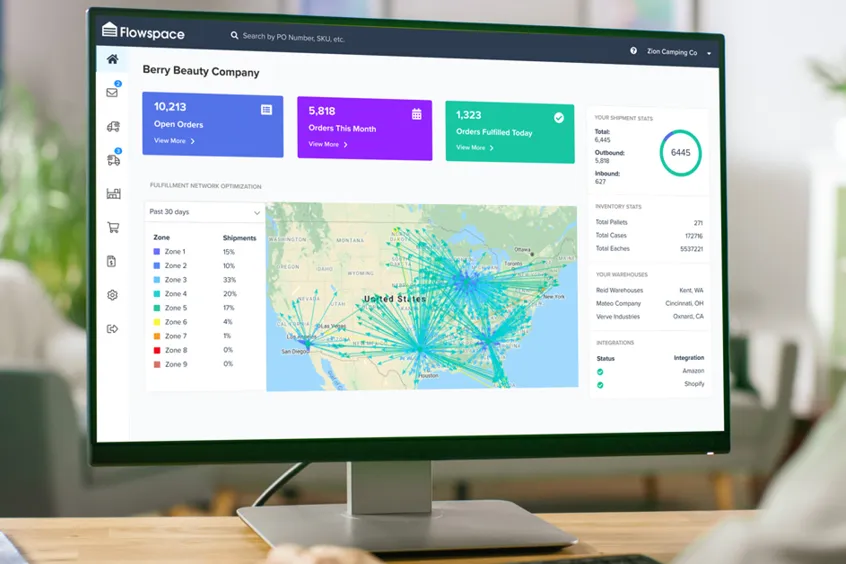
Flowspace supports e-commerce fulfillment solutions for brands selling anywhere online, including on Amazon.. The Flowspace Network is distributed across the country, which means Flowspace can store and manage your inventory at a fulfillment center closest to your customers to reduce shipping costs and speed up delivery times. Once an order is received from your online store, Flowspace gets to work picking, packing, and shipping each order, while the Flowspace platform offers you complete visibility over inventory, orders and customer insights.
As with Amazon FBA, Flowspace saves on time by providing e-commerce fulfillment services centralized in one platform with a focus on customer satisfaction through a seamless process. The flexibility of this solution makes it easier to grow and scale a business without having to adapt to the ever-changing costs and policies as with Amazon’s platform. Also, brands maintain control over their connection with customers and receive real-time insights to make decisions and changes as needed.
Although Amazon is an instantly recognizable brand, it can be difficult to succeed with FBA when strict regulations and fees are tacked on when there are mistakes or circumstances that occur beyond your control. Depending on the kind of products you’re selling, the convenience of the Amazon FBA program might not be worth the expenses and time that goes along with it.
Exploring other fulfillment options allows you to weigh the costs and convenience against the contingencies necessary to operate your business successfully. At Flowspace, we are dedicated to providing transparent pricing scales, real-time inventory visibility, and operational efficiency. There are no costly, day-to-day surprises to manage your order fulfillment process, and you can invest more fully in the growth of your business by knowing there’s a flexible, reliable fulfillment platform to support you.
Flowspace integrates seamlessly with your online stores and software, so you’ll maintain full oversight over your inventory to make immediate changes and plan accordingly. Finding a solution you can trust allows you to uphold customer satisfaction consistently.
Learn more about how our e-commerce fulfillment solutions can benefit you.
Last Updated
category
Related articles




















Start simplifying fulfillment with Flowspace today
Discover how Flowspace can simplify fulfillment and help your brand scale faster, with no long-term contracts or hidden commitments.
